Cascades 13 Day Mountaineering Course Itinerary
Washington13 Day Cascades Mountaineering Course Itinerary
Day 1
We begin the course with a 6:30 a.m. orientation and gear check at our Seattle office. Developing strong mountaineering skills starts with having the proper equipment, clothing, and nutrition for a safe and enjoyable experience in the mountains. Guides review equipment, discuss current weather and route conditions, fit rental gear, and answer final questions before departing for Mount Baker.
The first stage of the course is typically held on the south side of Mount Baker, where we hike through forests and alpine meadows to a camp near or above treeline. Carrying expedition loads, students begin developing efficient pacing and movement while experiencing the realities of mountain travel. Once camp is established, guides introduce expedition living, including camp setup, hydration, snow melting, backcountry cooking, personal maintenance, and Leave No Trace practices.
Skills Covered:
- Equipment selection, fit, and preparation
- Weather and conditions assessment
- Mountain travel with a loaded pack
- Camp setup and organization
- Cold-weather personal maintenance
- Hydration and snow-melting techniques
- Backcountry cooking and nutrition
- Leave No Trace principles
Day 2
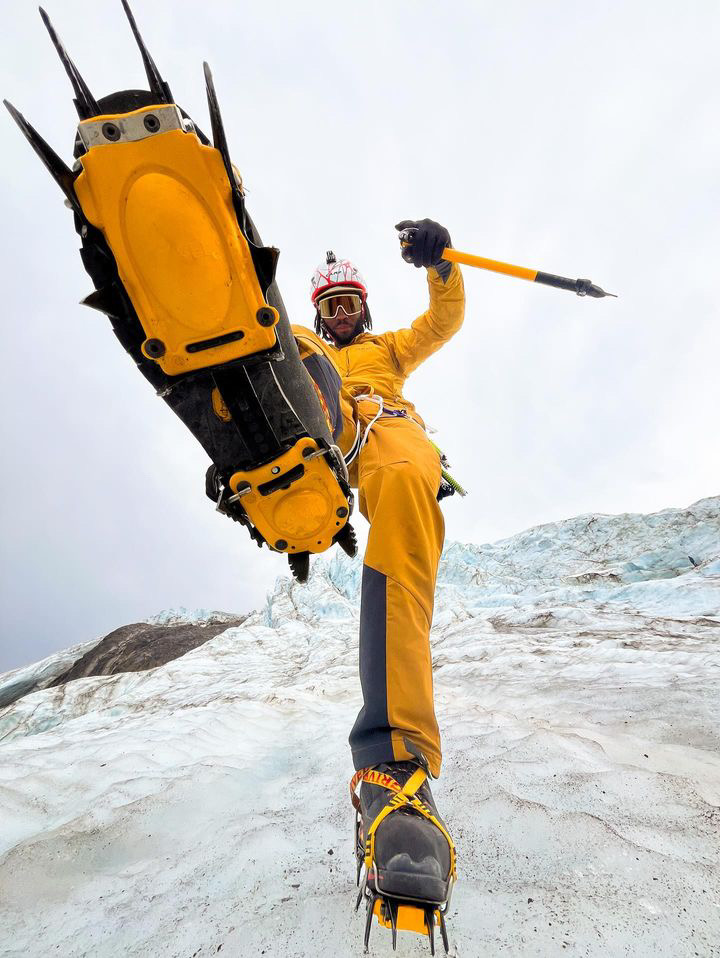
Today’s classroom is the glacier. Students begin by developing efficient movement on snow, learning crampon techniques, balance, pacing, and footwork before progressing to proper ice axe use and self-arrest from a variety of positions. These foundational skills become the basis for safe travel throughout the remainder of the course.
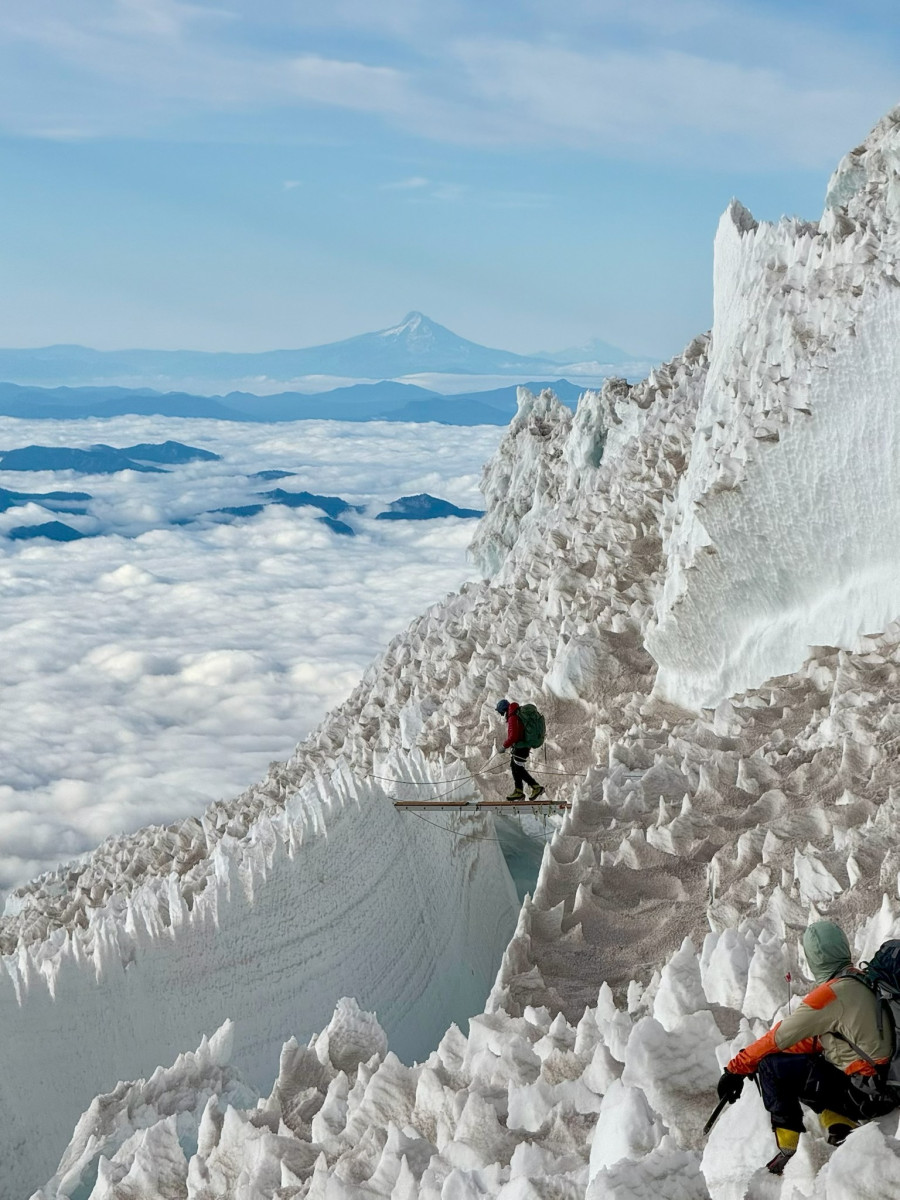
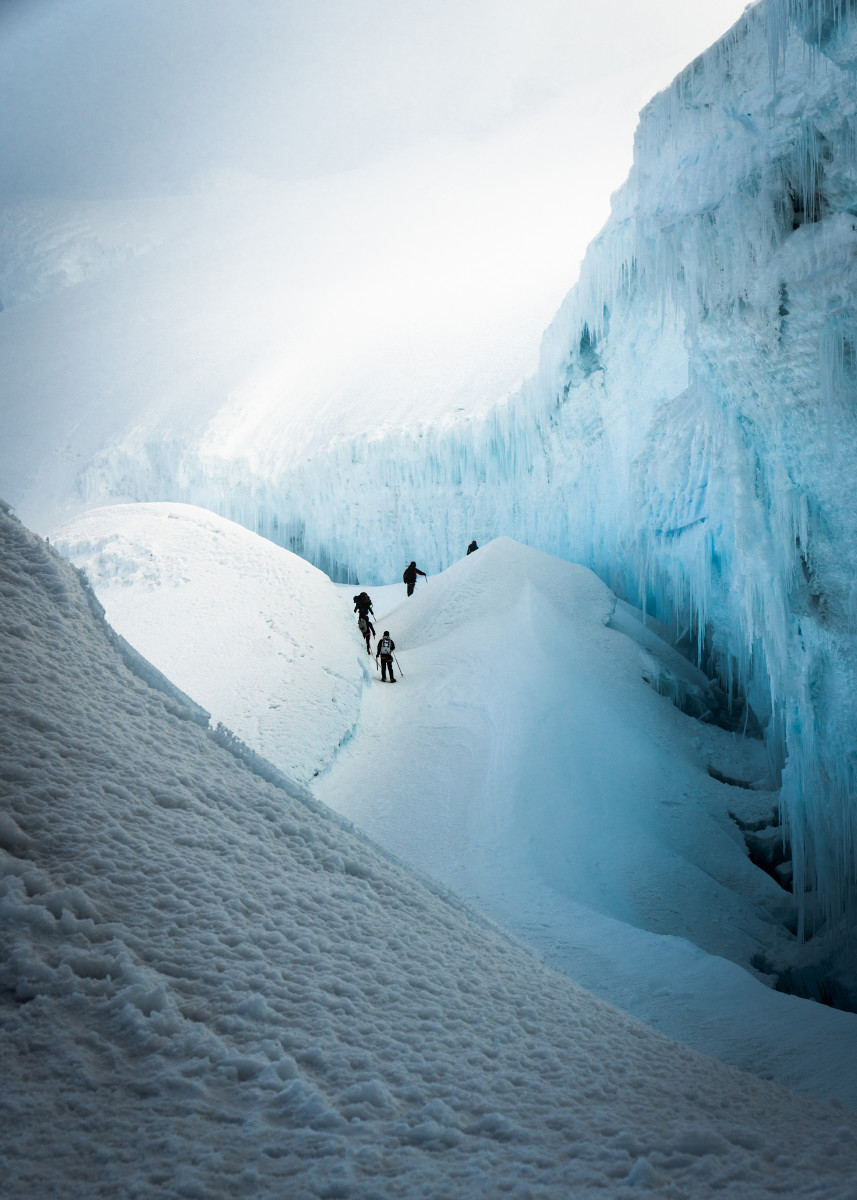
During the afternoon, students transition to the technical systems that support glacier travel. Guides introduce essential mountaineering knots, prussiks, and rope management before students put those skills into practice while traveling as rope teams. Conditions permitting, the day concludes with a glacier tour through blue ice, towering seracs, and seemingly endless crevasses, where communication, route finding, and hazard assessment take center stage.
Skills Covered:
- Efficient snow travel
- Crampon techniques
- Ice axe use and self-arrest
- Essential mountaineering knots & hitches
- Rope management
- Glacier rope team travel
- Communication and hazard assessment
Day 3
Today’s focus is building the technical systems that support safe alpine climbing. Students construct and evaluate a variety of snow anchors for belaying, rappelling, running protection, and rescue scenarios before putting each system to the test. Guides emphasize thoughtful construction and sound decision-making, demonstrating just how strong a properly built snow anchor can be.
Once anchor systems are established, students practice belaying, rappelling, and rope management before learning hauling systems and the principles of mechanical advantage. These techniques form the foundation for crevasse rescue while reinforcing the interconnected skills required for safe and efficient travel in glaciated terrain.
Skills Covered:
- Snow and ice anchor construction
- Anchor evaluation and testing
- Belaying techniques
- Rappelling systems
- Running protection
- Mechanical advantage concepts
- Hauling systems
- Rope management
Day 4
Today’s focus is crevasse rescue—the culmination of the rope, anchor, and hauling systems developed over the previous three days. Students begin with dry practice before progressing to realistic rescue scenarios on the glacier. Working as rope teams, participants learn to arrest a crevasse fall, construct secure rescue anchors, and execute a standard 3:1 Z-pulley rescue system. Guides also demonstrate rescue techniques for two-person rope teams and discuss when each system is most appropriate.
Students also have the opportunity to climb out of a crevasse using prussiks, gaining firsthand experience with the physical and technical demands of self-rescue. Although crevasses demand careful risk management, this is often one of the most memorable and rewarding days of the course.
Skills Covered:
- Rescue anchor construction
- 3:1 Z-pulley rescue
- Two-person rescue concepts
- Prussiking and self-rescue
- Team communication
- Glacier hazard management
- Risk management
Day 5
Today brings everything together as students prepare for a summit climb. Guides work with the team to develop a route plan, assess objective hazards, organize summit packs, and make thoughtful decisions based on weather and mountain conditions. The summit climb provides an opportunity to apply the technical and expedition skills developed throughout the course in a real alpine environment.
Traveling through glaciated terrain beneath towering seracs, students refine rope team travel, pacing, communication, and route finding while gaining valuable experience on a demanding Cascade objective. After returning to camp, the team packs up and descends to the trailhead before traveling east to the granite cliffs of Washington Pass.
Skills Covered:
- Summit planning and preparation
- Rope team efficiency
- Route finding
- Hazard assessment
- Expedition pacing
- Expedition transitions
Day 6
The focus now shifts from snow and ice to the rock walls surrounding Mazama, WA. Students begin by reviewing knots, belaying, and risk management before transferring those systems to a rock climbing environment. With the security of top ropes, climbers can focus entirely on developing efficient movement and confidence on stone.
Throughout the day, guides coach movement techniques for face, slab, and crack climbing while helping students become more comfortable on increasingly varied terrain. The crags of Mazama provide an ideal classroom, offering outstanding climbing with a short approach.
Skills Covered:
- Rock climbing movement
- Face, slab, and crack techniques
- Belaying review
- Top-rope climbing
- Rock climbing risk management
- Efficient movement on rock
- Climbing communication
- Transitioning alpine skills to rock
Day 7
Today’s focus is building the systems used in multipitch rock climbing. Guides introduce the principles of SERENE anchor construction using both bolts and traditional protection before students build and evaluate anchors of their own. Throughout the day, the class uses these systems during top-rope sessions while refining efficiency, communication, and sound decision-making.
As students become more comfortable on rock, guides introduce the mechanics of lead climbing, belaying from above, and efficient transitions at climbing stations. Because group abilities naturally begin to diverge at this point, instruction becomes increasingly individualized, allowing guides to tailor climbing objectives and coaching to each student’s goals and experience.
Skills Covered:
- SERENE anchor principles
- Bolt and gear anchors
- Anchor evaluation
- Lead climbing concepts
- Belaying from above
- Multipitch systems
- Climbing communication
- Individual movement coaching
Day 8
Today we leave the crag behind for one of Washington Pass’s classic alpine rock routes: the South Arête of South Early Winter Spire. While technically moderate, the route offers an ideal setting to apply the movement, rope systems, and risk management skills developed over the previous two days.
The climb weaves up clean granite ridges with outstanding exposure and panoramic views stretching across the North Cascades. Students gain valuable experience managing a longer alpine objective while enjoying one of the region’s most celebrated summits. The day typically lasts eight to nine hours from the trailhead.
Skills Covered:
- Multipitch climbing
- Alpine rock movement
- Route management
- Belay transitions
- Efficient rope systems
- Exposure management
- Summit execution
Day 9
Today’s objective is a longer alpine climb selected to match the interests, experience, and goals of the group. Depending on conditions, guides may choose objectives such as Cutthroat Peak or Spontaneity Arête, each providing an excellent opportunity to move efficiently through fourth- and low fifth-class terrain in a true alpine environment.
With 10 to 12 hours of hiking and climbing, students combine route finding, rope management, efficient movement, and sound judgment on increasingly complex terrain. By the end of the day, climbers are operating with greater confidence and preparing to bring all of their newly acquired skills together during the expedition phase of the course.
Skills Covered:
- Alpine rock travel
- Fourth- and fifth-class movement
- Route finding
- Rope management
- Expedition pacing
- Team communication
- Hazard assessment
Day 10
The final phase of the course is a true alpine expedition. Students pack for a multi-day objective in the North Cascades, combining the glacier travel, mountaineering, rock climbing, and expedition systems developed throughout the previous nine days. The exact objective is selected based on weather, mountain conditions, and the experience of the group, ensuring the safest and most rewarding climb possible.
Whether traveling through glacier-carved valleys or climbing elegant granite ridges, this expedition is designed to bring every skill together in a real alpine environment. Students take on increasing responsibility while guides mentor route planning, camp management, communication, and decision-making throughout the climb.
Skills Covered:
- Expedition planning
- Route selection
- Camp management
- Glacier and rock systems integration
- Team communication
- Expedition logistics
- Alpine decision-making
- Leadership development
Day 11
Depending on the chosen objective, today is devoted to moving higher on the mountain, refining technical skills, or making a summit attempt. Guides tailor instruction to the terrain, reinforcing efficient movement while helping students apply the judgment and systems they’ve developed throughout the course.
As the terrain becomes more committing, students experience the rhythm of an alpine expedition—balancing movement, route finding, weather assessment, and energy management while traveling through some of the most spectacular wilderness in the North Cascades.
Skills Covered:
- Advanced alpine movement
- Route finding
- Glacier or rock travel
- Expedition pacing
- Weather assessment
- Team communication
- Risk management
- Leadership skills
Day 12
Today is typically reserved for the primary summit attempt. Whether climbing a classic granite ridge, navigating glaciated terrain, or combining both, students apply every aspect of the curriculum—from efficient movement and rope management to hazard assessment and sound decision-making.
Reaching the summit is rewarding, but the true objective is becoming a more capable and confident mountaineer. Guides emphasize that successful alpine climbing includes making thoughtful decisions, adapting to changing conditions, and returning safely to camp.
Skills Covered:
- Summit execution
- Integrated alpine systems
- Rope team efficiency
- Hazard assessment
- Route management
- Technical climbing
- Mountain decision-making
- Expedition leadership
Day 13
After breaking camp according to Leave No Trace principles, the team returns to the trailhead and begins the drive back to Seattle. Depending on the objective and timing, there may be opportunities to review advanced topics or revisit skills before hiking out. The journey home provides time to reflect on nearly two weeks of intensive learning in some of the finest alpine terrain in North America.
Throughout the course, navigation using map, compass, GPS, and altimeter, along with route finding, glaciology, mountain decision-making, and personal well-being, are integrated into daily instruction rather than confined to a single lesson. As always, guides continually adapt the itinerary to match current weather, mountain conditions, and the needs of the group, providing the safest and most rewarding learning experience possible.
Skills Covered:
- Leave No Trace
- Navigation fundamentals
- Risk management
- Mountain decision-making
- Skill integration
- Self-assessment
Possible Final Objectives
The final expedition is chosen based on seasonal conditions, weather, and the experience of the group. Each objective offers a unique opportunity to combine glacier travel, rock climbing, route finding, and expedition skills on one of the North Cascades’ classic alpine climbs.
Forbidden Peak – West Ridge (Grade II–III, 5.6)
One of North America’s most celebrated alpine rock climbs, the West Ridge of Forbidden Peak combines solid granite, spectacular exposure, and unforgettable views deep in the heart of the North Cascades. Featured in Fifty Classic Climbs of North America, it remains one of the region’s premier mountaineering objectives.
Sahale Peak – Quien Sabe Glacier (Grade II, 4th Class)
A favorite among Alpine Ascents guides, Sahale Peak offers an ideal blend of glacier travel and moderate alpine climbing. The elegant summit ridge rises above the Quien Sabe Glacier, rewarding climbers with sweeping views across the rugged peaks of the North Cascades.
Sharkfin Tower (Grade II, 5.0)
Rising dramatically above Boston Basin, Sharkfin Tower is an 800-foot granite spire surrounded by glaciers and alpine scenery. Reaching its summit requires steep snow travel followed by enjoyable fifth-class climbing on clean granite in one of the most scenic settings in the range.
Mount Shuksan – Fisher Chimneys (Grade III, 4th Class)
The Fisher Chimneys route is one of the North Cascades’ classic alpine objectives, combining a beautiful approach, moderate rock climbing, glacier travel, and an airy summit pyramid. From Lake Ann to the spectacular summit ridge, it showcases nearly every aspect of Cascade mountaineering and serves as a fitting culmination of the course.