Rainier Denali Preparation & Winter Mountaineering
Washington6 Day Rainier Denali Preparation Course
- Mountaineering School
- Pack Weight: 60+ Lbs
- 6 Days
- Gallery
- Dates & Pricing


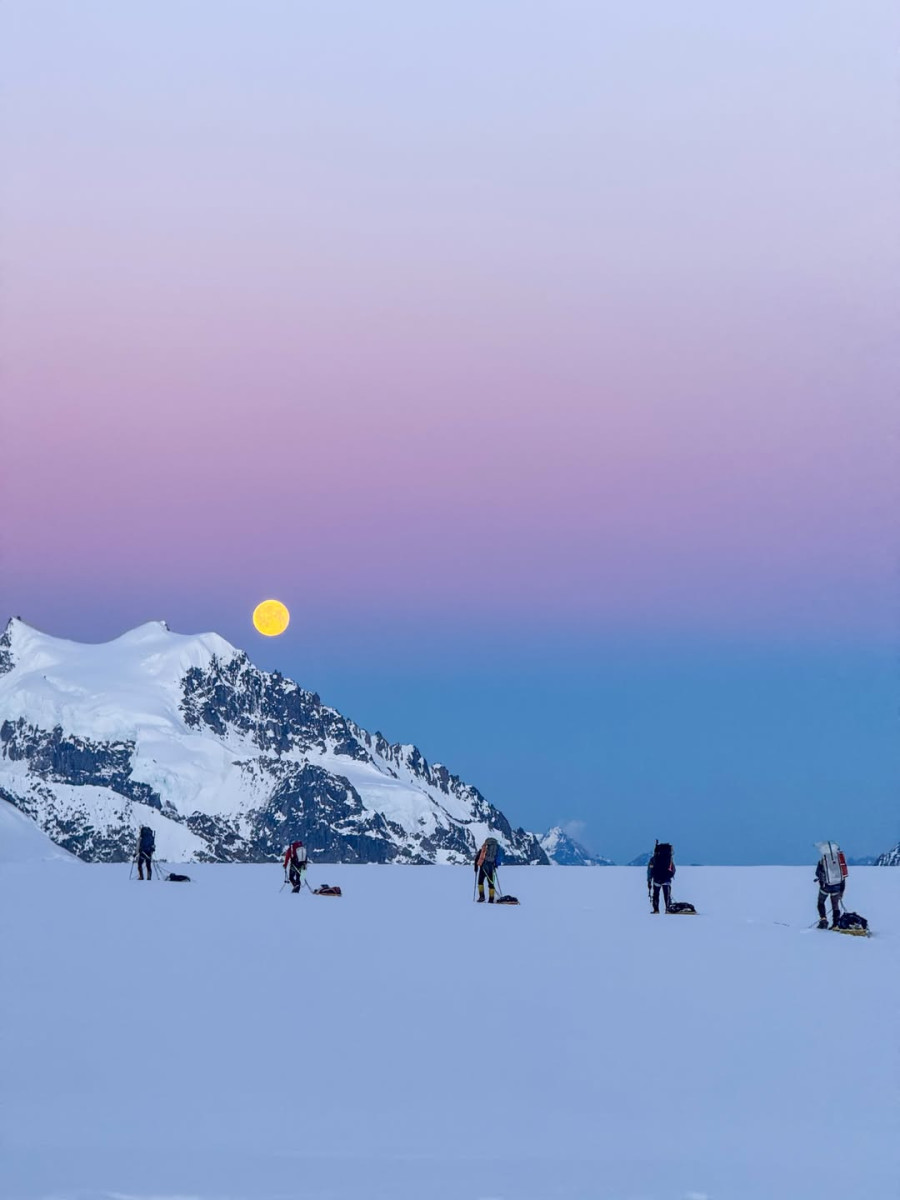
Our 6 day Denali Preparation program is an arduous training program designed to provide the final preparation for climbers before going to Alaska and attempting Denali. Training takes place on Mount Rainier, originally named “təqʷuʔməʔ” (Taquoma), where winter and spring conditions provide an ideal environment for simulating the demands of the Alaska Range. We spend 6 full days in the mountains to provide as much time in the field as possible. This is not a summit-focused program. Weather and avalanche conditions often limit how high we can safely travel, so the emphasis remains on skill development rather than reaching the top. In rare cases, if conditions allow, a summit attempt may be possible.
Course Highlights

World-Class Reputation: One of the world’s finest and most renowned climbing schools

Decades of Experience: Alpine Ascents has been training climbers for Denali and guiding expeditions on Denali for over 30 years

Expert Guides: Your guides bring deep technical knowledge, global and Denali specific expedition experience, and a strong emphasis on teaching

Guide Ratio: 4:1 climber-to-guide ratio and individualized instruction from Denali expedition guides

Transportation: Round-trip transportation from Seattle to Mount Rainier

Technical Development: Prepares graduates for Denali, Vinson, and other high altitude objectives

Meal Planning: Learn to plan, pack, and prepare efficient, calorie-appropriate meals for alpine environments

Personalized Evaluation: Each climber receives individual feedback on their strengths, areas for growth, and recommended next steps in their climbing journey

Gear Support: Full-service gear department for equipment questions, consultations, and rentals

Personal Consults: Personal training consults available
Alpine Ascents Denali Prep Course

How to Choose a Course
Choosing a Mountaineering Course
Learn More
What You'll Learn
Course Learning Objectives and Outcomes
Learn More
Where This Course Takes You Next
Next Steps in your Mountaineering Progression
Learn More
Mountaineering School History
30+ Years of Mountaineering School on Baker and Rainier
Learn More
The Alpine Ascents Way
Our Ethos for Denali Prep
Learn More
Indigenous History
Learn More
The course was excellent.
The guides made a significant effort to compare everything we did to an actual Denali expedition. That really put me at ease and helped me understand expectations for a future Denali trip.
Best teachers in the business.
Learning Objectives
The demanding environment of Mount Rainier provides the ideal setting for this expedition-focused training program. Over six days in the field, climbers are immersed in the systems, skills, and daily routines required for success on Denali. Winter and spring conditions on Rainier closely mirror those found in the Alaska Range, allowing for realistic, hands-on preparation in a controlled learning environment.
This program emphasizes the full scope of expedition climbing. Instruction is cumulative and hands-on, with a focus on efficiency, communication, and decision-making within a team setting.
Technical Skills
Students will develop and improve hands-on technical skills essential for safe snow and alpine climbing, including:
- Sled hauling, packing, and rigging
- Snow camping and camp fortification techniques, including building wind walls
- Self care and managing life in cold, high-consequence environments
- Snow travel, ice axe use, self-arrest
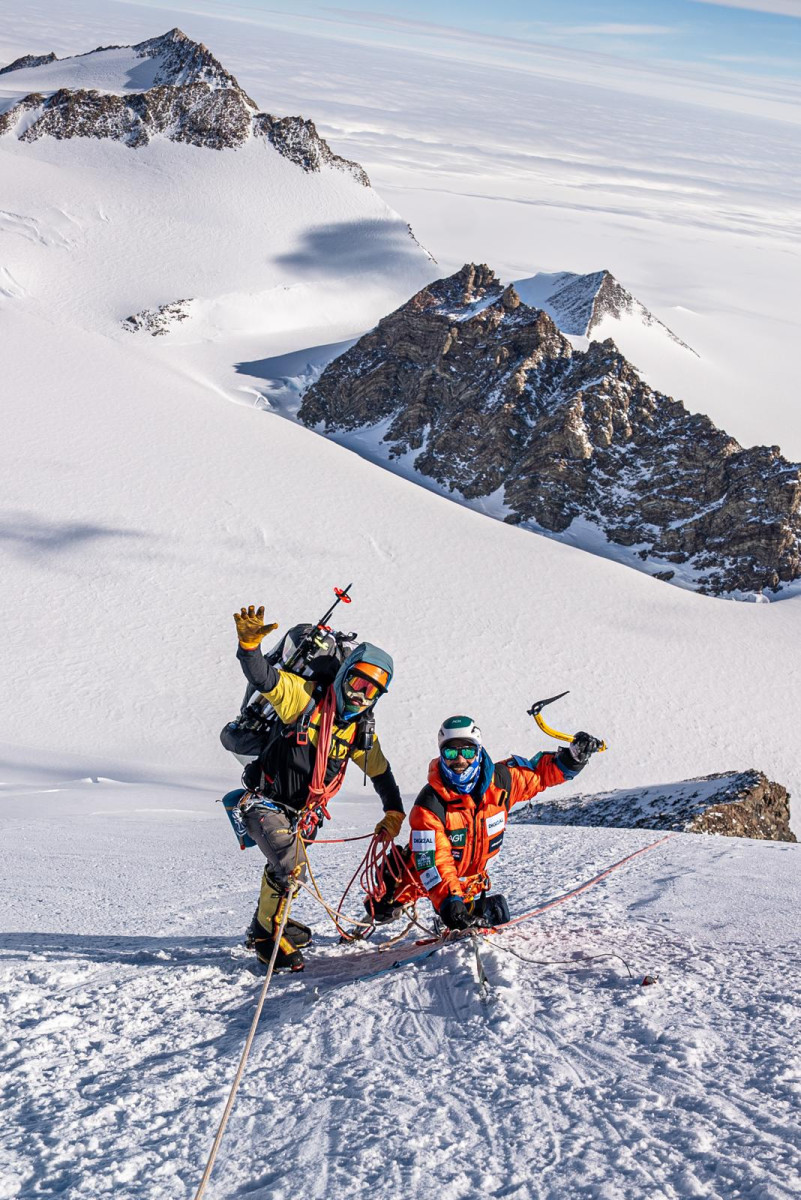
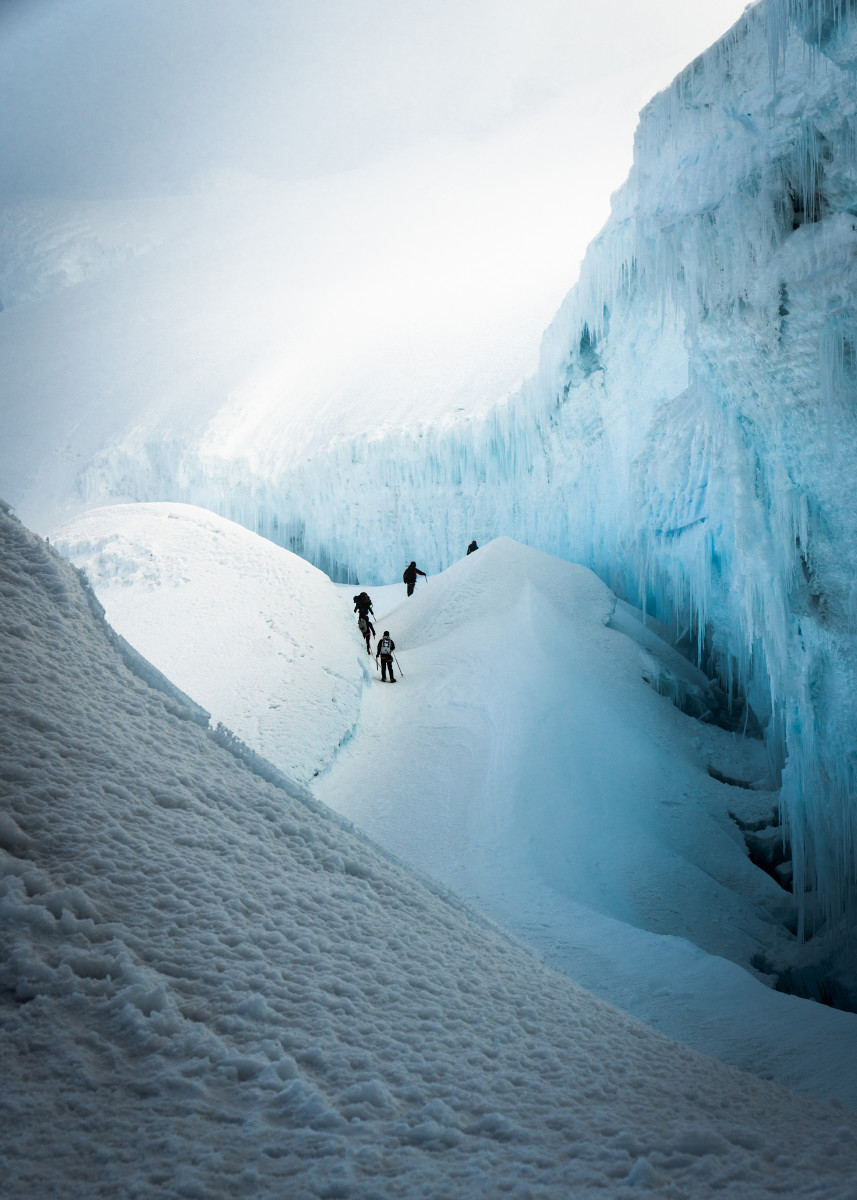
- Rope team travel (rope team movement, spacing and sled configuration, and terrain negotiation)
- Single-point and equalized anchors
- Fixed line ascending, belaying, rappelling
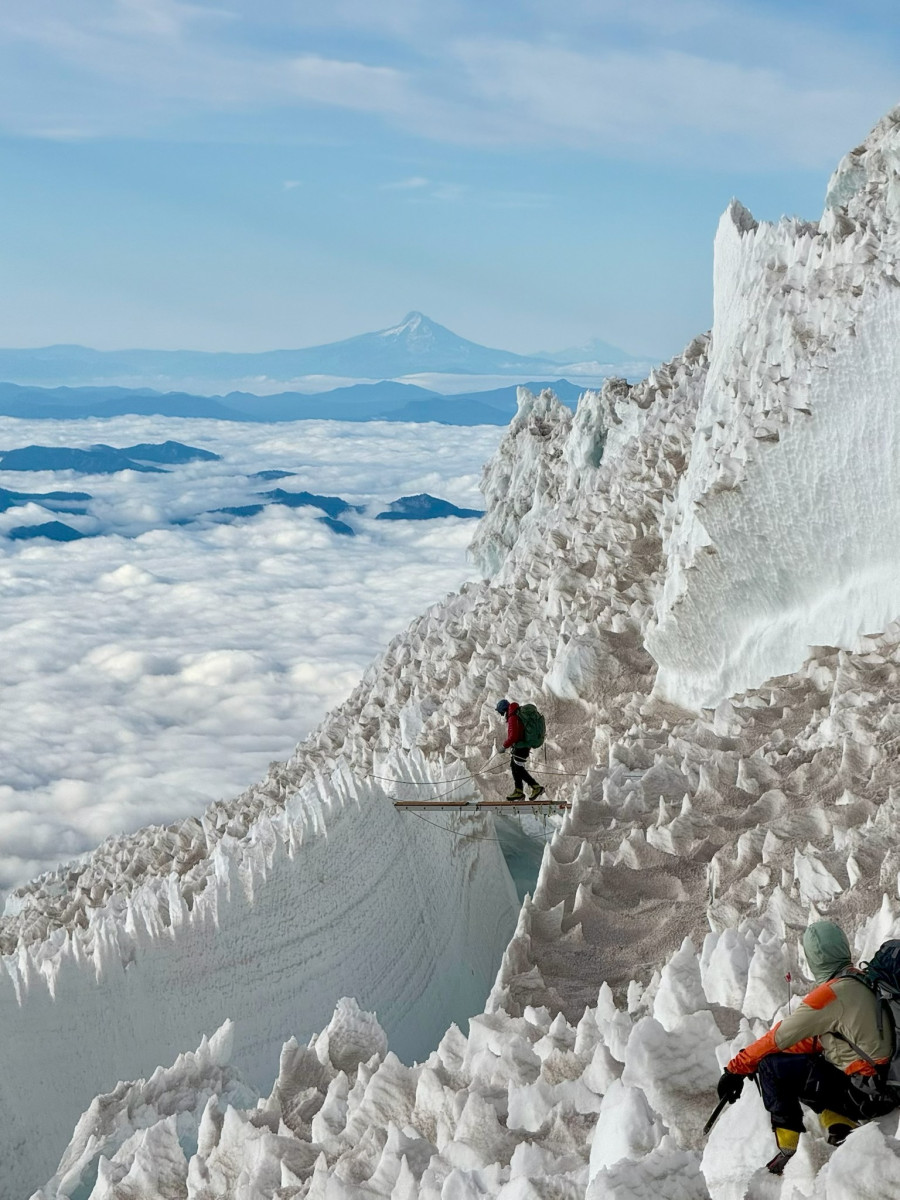
- Crevasse rescue setup and execution
- Whiteout navigation and hazard assessment
Meal Preparation
Climbers plan, pack, and prepare efficient, calorie-appropriate meals for alpine environments, with instruction provided along the way.

Where This Course Can Take You Next
The Denali Prep course on Mount Rainier serves as a foundational training course for climbers who want to build expedition skills before a big objective like Denali. It’s best suited for intermediate climbers motivated to develop practical expedition skills: hauling sleds, rigging systems, building snow shelters, and living comfortably in challenging conditions. Strong performance can “approve” applications for major expeditions, including Denali, when combined with appropriate fitness and recent glaciated climbing experience.
It’s important to note that climbers will develop skills at different rates. Completion of this course does not automatically approve a climber for Denali, and not every climber leaves the course with the same level of technical proficiency, efficiency, or comfort in complex terrain. Alpine Ascents’ guides provide individualized feedback and recommendations to help each climber choose appropriate next steps based on performance, fitness, and overall readiness.
30+ Years of Mountaineering School
Alpine Ascents brings more than 30 years of guiding experience in the Cascades and on the world’s highest peaks. This long-standing program has helped launch the alpine careers of countless climbers who have gone on to pursue objectives around the world. Our deep experience climbing and preparing climbers for Denali allows us to operate with refined logistics, conservative decision-making, and consistent guiding standards— creating a focused, supportive learning environment for meaningful skill progression.


The Alpine Ascents Way
Our Denali Preparation Course on Mount Rainier reflects the same values that define Alpine Ascents across all of our programs: exceptional guiding, deliberate instruction, and a commitment to preparing climbers for success beyond a single trip. While some programs focus on pushing higher or checking a box, our approach is rooted in education. We believe the best mountaineering course builds not only strength and endurance, but the systems, judgment, and resilience required for a successful expedition.
The foundation of this course is our professional guide team. Many have guided Denali 10+ times and bring deep experience in expedition climbing, risk management, and instruction. Their role extends far beyond leading movement on the mountain. They are educators who teach efficient systems, reinforce decision-making in complex environments, and help climbers understand not just what to do, but why it matters.
Since 1986, Alpine Ascents has been preparing climbers for the world’s great mountains. This program continues that tradition, offering a focused, field-based training experience designed to bridge the gap between mountaineering courses and a Denali expedition.
Indigenous History of təqʷubəʔ
We acknowledge we gather upon the ancestral lands of the Muckleshoot, Puyallup, and Nisqually Tribes. These communities have lived on and stewarded the lands surrounding təqʷubəʔ (tah-ko-bah) since time immemorial, and continue to do so today. We recognize that this land acknowledgment is one small step toward true ally ship and we commit to uplifting the voices, experiences, and histories of the Indigenous people of this land and beyond.
For the last century, the highest volcano looming over the PNW has been known widely as Mount Rainier. This name, coined by a European explorer, holds minimal significance to the rich history of the land and culture existing in this space since time immemorial. Although it has grown to hold meaning today, the aim of the history presented here is to educate about the local Native American history on and around Tahoma (Mount Rainier).
Tahoma, just one of the many names for the highest volcano in Washington state, means Mother of the Waters. Native American stories tell of a time when the mountain we know today as Tahoma lived in the Olympic mountain range. The range became too crowded, so Tahoma decided to move out and into less populated lands. She told her son- “Taquotma” Translation: Don’t forget the water. Her son brought the waters out East with them, which is why Tahoma- The Mother of Waters- serves as the headwaters for many rivers in the area.
Within the last century, archeological studies have found evidence of Native American tribe activity dating back thousands of years. Archeologists predict Native American communities lived in the plains surrounding Tahoma as early as 15,000 to 10,000 years ago. Since then, when glaciers began to melt, communities moved higher up the mountain as flora and fauna began to thrive within the area. More recent archeological studies have found remnants of tribe’s rock shelters and foraging materials such as food, tools, and fire pits dating back 1,200 years. For more information on the archeological history of Tahoma visit the NPS Mount Rainier Website.
History of Western Washington Tribal Lands
Since time immemorial, native tribes of Washington have inhabited the land on and around Tahoma. The Cowlitz, Muckleshoot, Nisqually, Puyallup, Squaxin Island, Yakama, and Coast Salish tribes are those that call parts of Tahoma home today. There are many different names for the mountain, Tahoma being one well known throughout the region. Tribes coexisted upon the land for centuries. Within the last 200 years, European colonizers arrived and began commandeering the land. In 1854 The Treaties of Point Elliott and Medicine Creek were instituted, allocating small plots of land for tribes to live upon and continue their traditional practices. Throughout the early 1900’s, tribes watched their ancestral lands quickly diminished even further – often left with just a few acres to call home. Settlers continued to seize their homelands. Throughout the early 2000’s, tribes such as the Muckleshoot and Puyallup began reclaiming their homelands, slowly buying back the land that had been sold to non-Indians throughout the early 1900’s. Today, indigenous climbers are reconnecting with Tahoma on both personal and collective levels. Climbers are on a quest to reintroduce Native people to these spaces and embrace Tahoma as a symbol of visibility for the indigenous stories and history of the mountain. We will continue to support these efforts as best we can.


Rainier Denali Preparation Course Blog
More from the blog


Denali Preparation Course FAQ
The course takes place on Mount Rainier (Tahoma / Taquoma) in Washington State, using the late winter and early spring conditions on the mountain to simulate the extreme weather and expedition environment found on Denali.
The course is designed specifically to train climbers for Denali and other major 20,000-foot peaks by developing expedition winter survival skills, cold-weather camp management, team efficiency, and technical snow techniques.
No. This is an instructional course focused entirely on winter skill development rather than a summit attempt. High avalanche hazards and severe winter weather on Mount Rainier generally prevent moving high on the mountain during this time of year.
The course is designed for advanced beginners and intermediate climbers who already have prior glaciated climbing experience and want to prepare for Denali or major winter expeditions.
Climbers should have previous glacier travel experience (such as a summer mountaineering course or glaciated summit climb). Total beginners with no prior glacier experience are encouraged to take a summer 9-Day or 10-Day course instead.
Students receive hands-on training in pulling sleds while wearing heavy packs, constructing snow walls for wind protection, managing snowshoes, fixed-line ascension, whiteout navigation, and winter camp maintenance.
This is an extremely demanding course physically. Climbers must be capable of carrying a 55 to 60 lb. backpack while simultaneously pulling a sled weighing an average of 25 lbs. or more over winter snowpack.
Snowshoes provide a standardized, highly efficient method for hauling heavy sled loads through deep winter snow without the steep learning curve and equipment variations associated with backcountry ski touring.
Students learn how to select safe winter campsites, probe for snow depth, dig snow trenches, build protective snow walls around tents, manage fuel and melt snow efficiently, and stay warm in sub-zero environments.
Students camp in 4-season expedition tents on the snow, typically establishing winter base camps in the Paradise or Muir snowfield areas of Mount Rainier National Park.
Alpine Ascents provides group expedition hardware, ropes, tents, sleds with duffels, and snow shovels. Students provide their own personal winter cold-weather clothing, double mountaineering boots, snowshoes, sleeping bags rated for cold temperatures, and personal technical gear.
No. Students plan, purchase, and prepare their own backcountry winter meals and trail snacks for the entire course, providing critical practice in managing high-calorie winter expedition nutrition.
A mandatory orientation and gear check takes place at 3:00 p.m. at the Alpine Ascents office in Seattle the day before the course begins to inspect winter gear, fit rental items, and organize sled setups.
Yes. Round-trip van transportation between our Seattle office and Mount Rainier National Park is included in the course tuition.
The Denali Prep courses run during the late winter and early spring months from January through May, taking advantage of the coldest, snowiest window on Mount Rainier.