8 Day Rainier Mountaineering Course
Washington8 Day Mountaineering Course
- Mountaineering School
- Pack Weight: 65-70 Lbs
- 8 Days
- Gallery
- Dates & Pricing


A highly demanding and comprehensive program, our popular 8 Day Mountaineering Course on Mount Rainier (təqʷuʔməʔ [Tahoma]) combines intensive mountaineering training on the Emmons Glacier with a summit attempt via the Emmons Route.
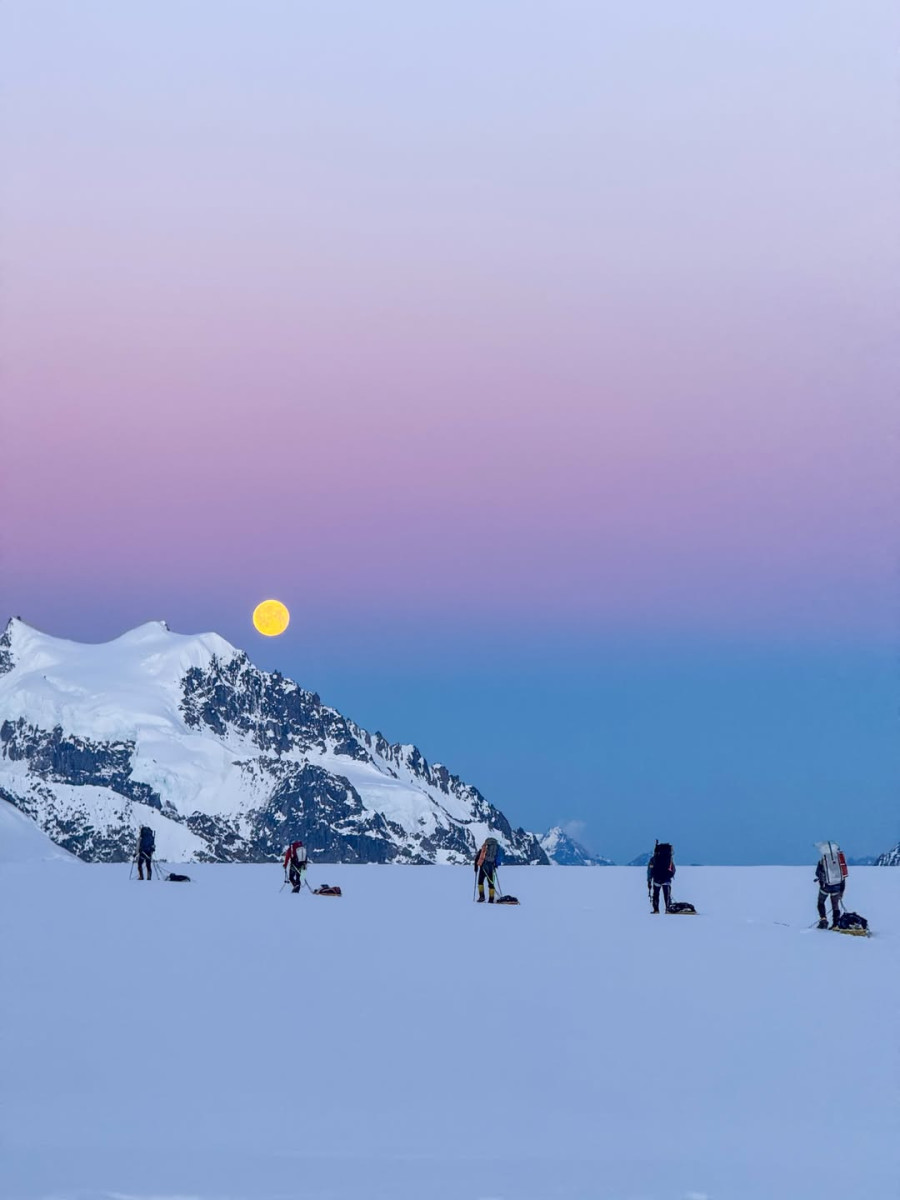
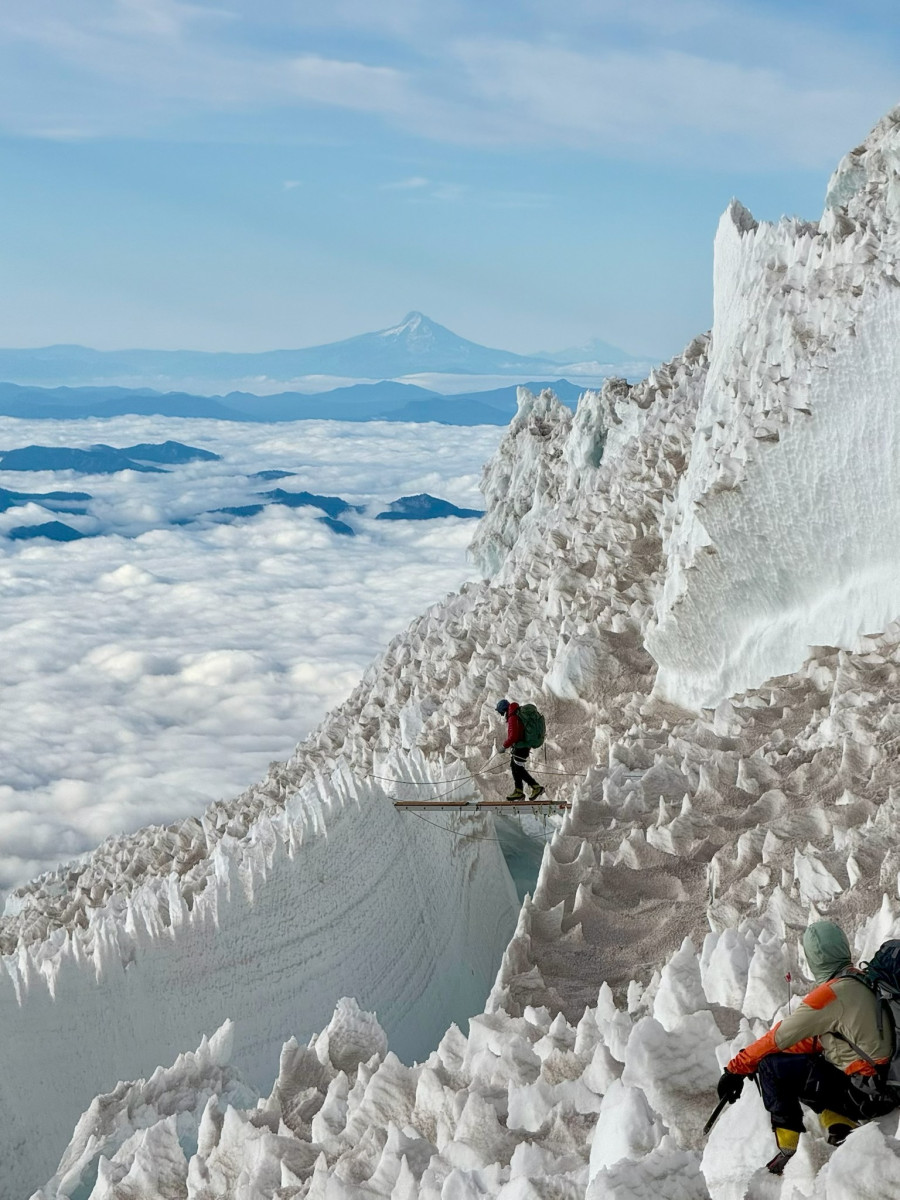
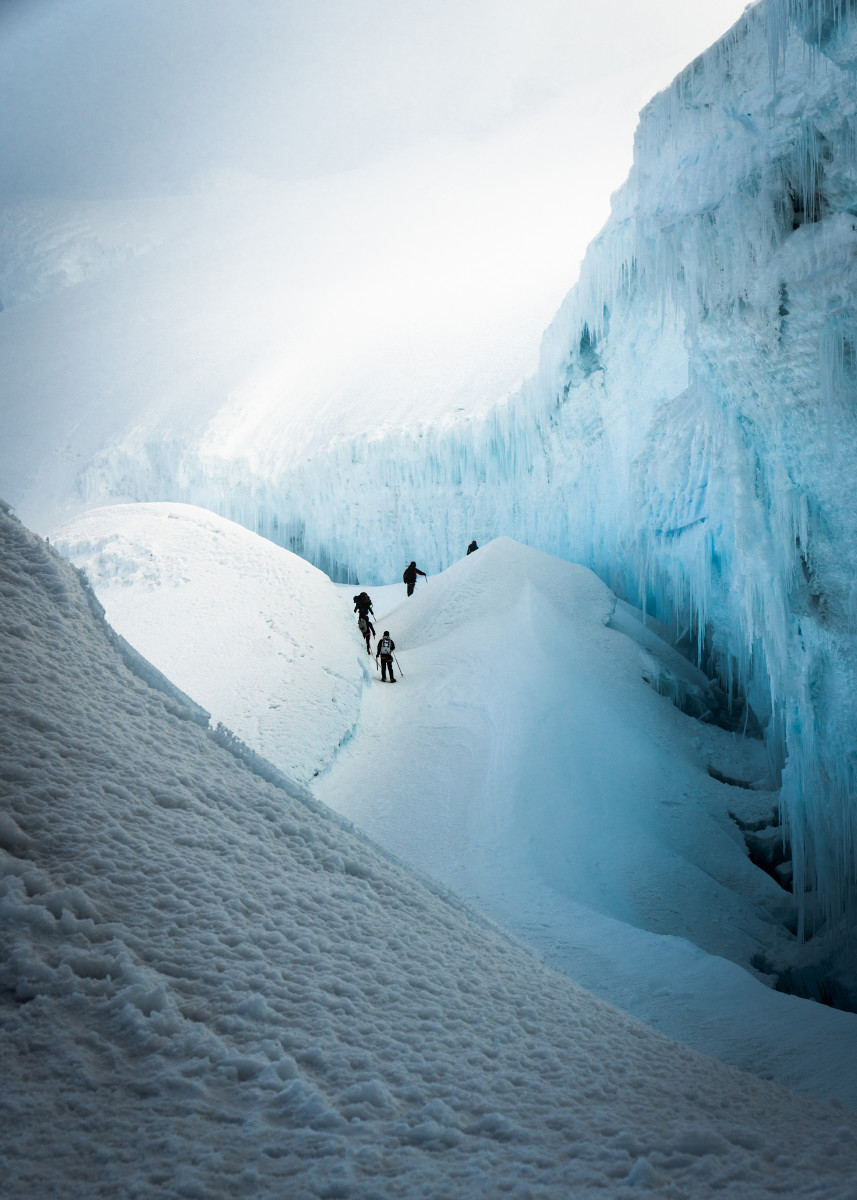
On Rainier’s Emmons Glacier, participants train in an ideal setting for snow and glacier climbing in an attempt to summit the highest volcano in the contiguous United States. The team will spend the first 5 days learning and refining mountaineering skills such as crevasse rescue, glacier travel, and navigation. During the remaining 3 days, participants put these newfound skills into practice while climbing the Emmons Route on Mount Rainier. On summit day, teams have a 2:1 climber-to-guide ratio, which allows participants to work closely with one guide throughout the climb, learning professional tips and techniques while heading for the summit.
Throughout the course, our guides cover additional topics, including climbing equipment review, route finding, climbing protection, and steep snow climbing (if conditions permit). This one-of-a-kind course is offered only a few times each season. It requires excellent fitness and the ability to carry up to 70 pounds.
Compared with our other Mount Rainier climbing programs, the Emmons route offers climbers fewer crowds, more vertical gain, greater travel distance, and the opportunity to climb on the largest glacier by area in the contiguous United States.
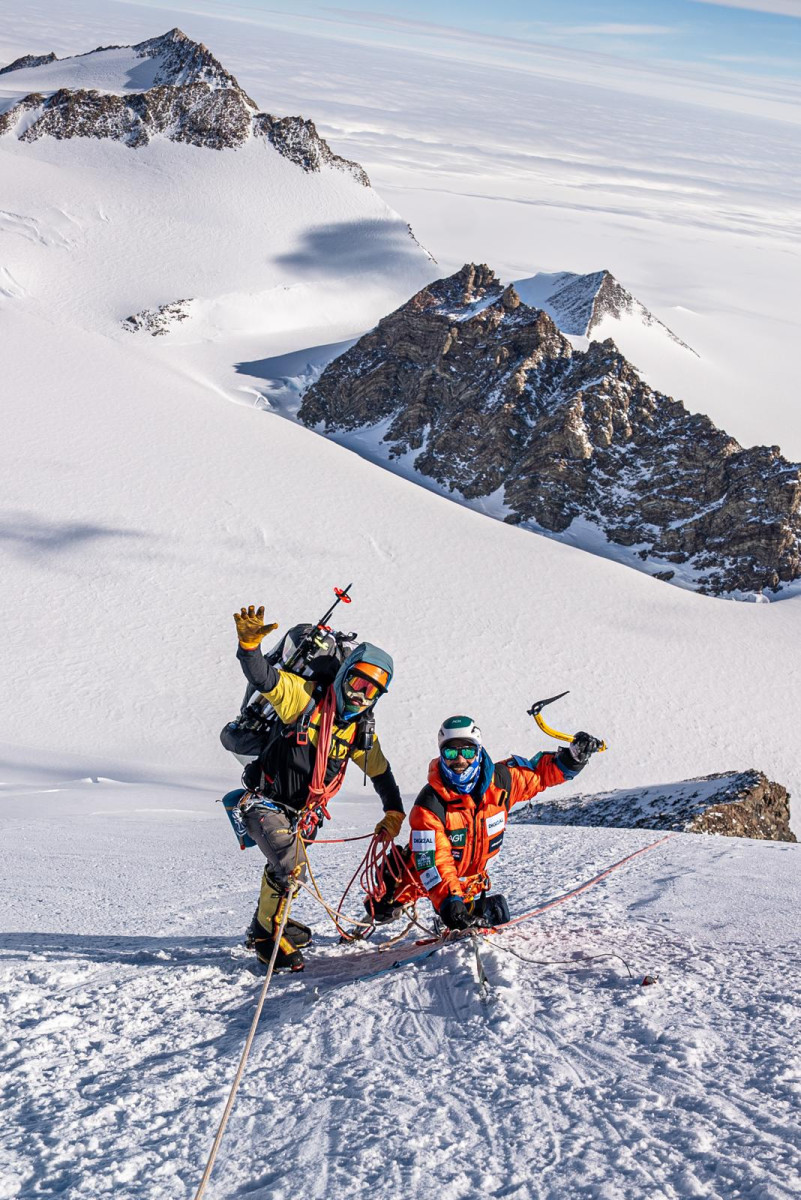
Those who successfully complete this course will be eligible to join our Denali expeditions and other high-altitude climbs around the world.
Course Highlights

World-Class Reputation: One of the world’s finest and most renowned climbing schools

Emmons Route Climb: Course includes an ascent of Mount Rainier via the remote Emmons Route.

Expert Guides: Deep technical knowledge, global expedition experience, and a strong emphasis on teaching

Meal Planning: Learn to plan, pack, and prepare efficient, calorie-appropriate meals for alpine environments

Gear Support: Full-service gear department for equipment questions, consultations, and rentals

Round-trip Transportation: Included between Seattle and Mount Rainier

Personalized Evaluation: Each climber receives individual feedback on their strengths, areas for growth, and recommended next steps in their climbing journey

Small Team Size: Maximum team size of 8 climbers.

Path to Advanced Climbs: Successful completion qualifies climbers for many of Alpine Ascents’ advanced programs and expeditions, including Denali and Vinson.

Personal Consults: Personal training consults available
Alpine Ascents Mountaineering School

How to Choose a Course
Choosing a Mountaineering Course
Learn More
What You'll Learn
Course Learning Objectives and Outcomes
Learn More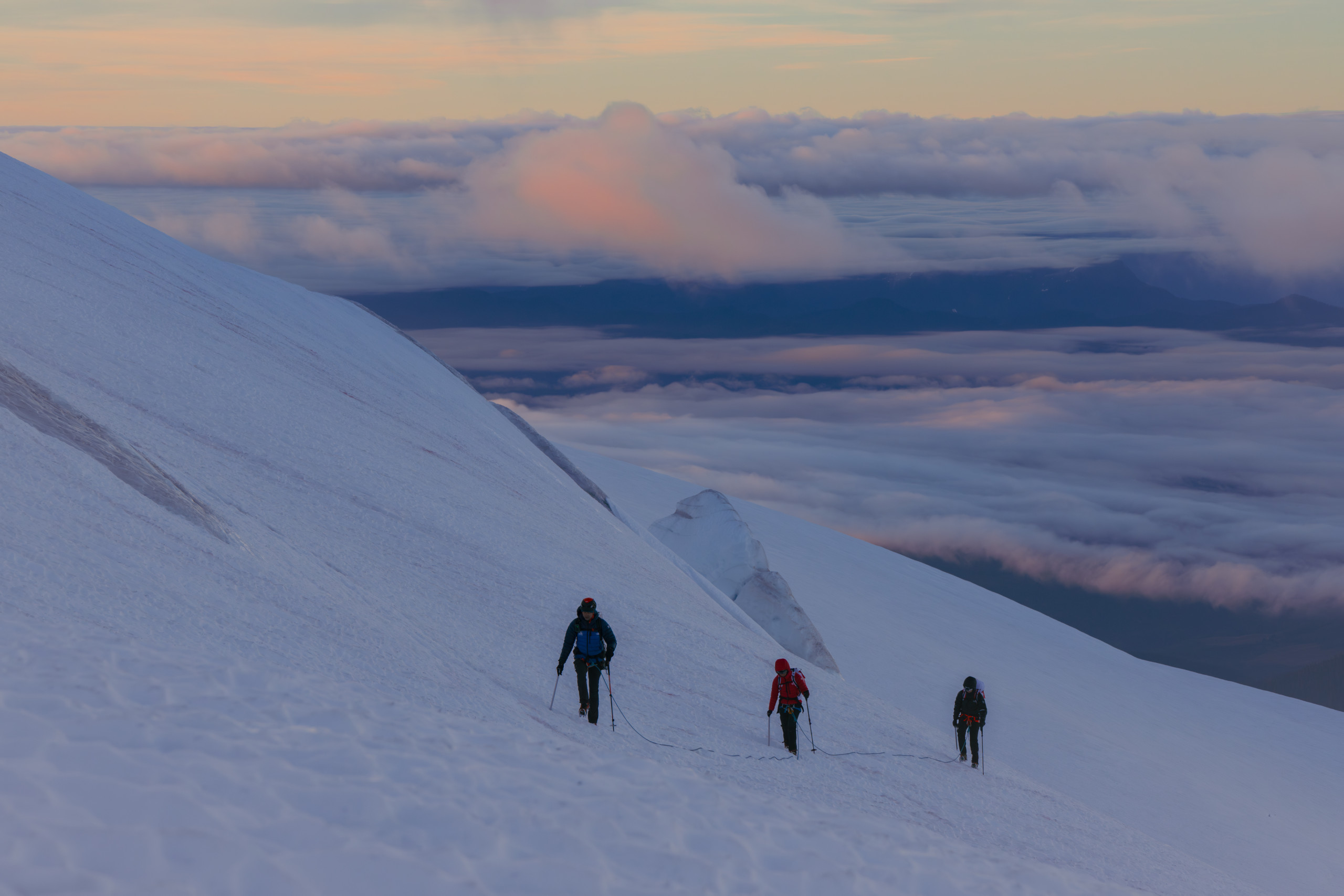
Where This Course Takes You Next
Next Steps in your Mountaineering Progression
Learn More
Mountaineering School History
30+ Years of Mountaineering School on Baker and Rainier
Learn More
The Alpine Ascents Way
Our Ethos for the Alpine Ascents Mountaineering School
Learn More
Indigenous History
Learn More
Our guides were excellent teachers, patient, thorough and detailed.
They clearly love what they do and have a visible passion for helping others learn these skills.
The curriculum was rigid enough to provide a cohesive “path of learning,” yet flexible enough to allow everyone to tailor their own experience.
When unforeseen things threatened the trip, the guides provided a swift and clear solution, on multiple occasions. Allowing me to continue the trip, and ultimately, giving me a path forward in life. A truly life-altering experience. Thank you.
My guides had the chemistry of a band, and the knowledge of two experts.
Learning Objectives
This course provides climbers with a comprehensive foundation in technical mountaineering skills, mountain judgment, and risk-aware decision-making in real alpine terrain. Through hands-on instruction and guided practice, students build the core systems and movement skills required for safe travel on snow and glaciers, while developing the ability to assess hazards, manage risk, and make sound decisions in changing mountain environments. The curriculum emphasizes practical, transferable skills that prepare climbers for progression to more advanced objectives, whether continuing in the Cascades or building toward bigger international climbs.
Technical Skills
Students will develop and improve hands-on technical skills essential for safe snow and alpine climbing, including:
- Glacier travel fundamentals (rope team movement, spacing, and terrain negotiation)
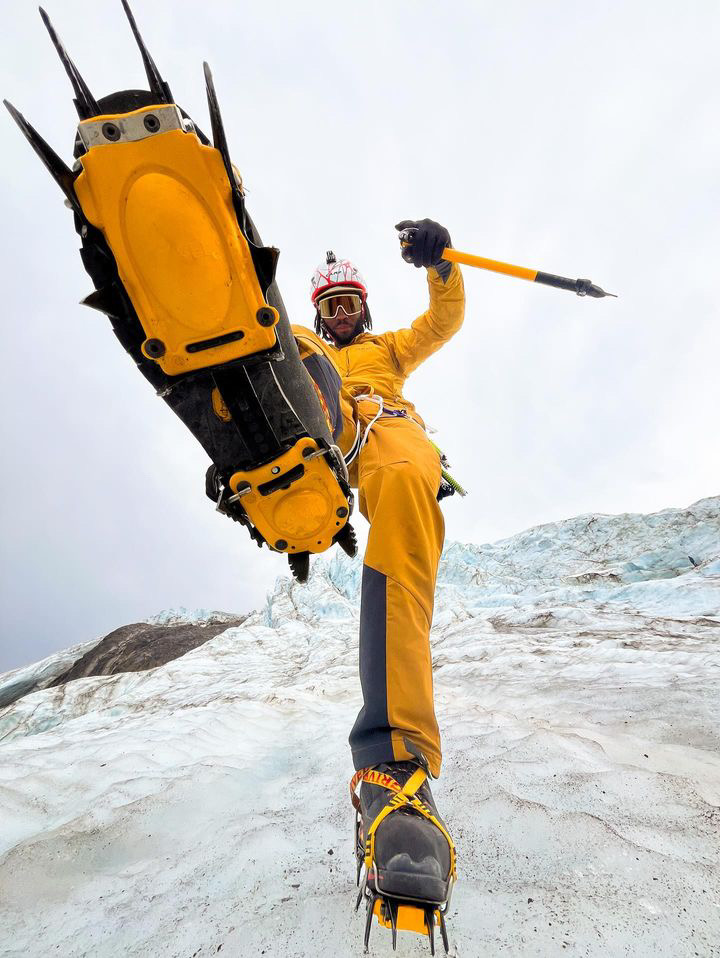
- Proper crampon use for snow and ice travel
- Rope handling and belay systems for snow and glacier terrain
- Self-arrest techniques with an ice axe on snow slopes
- Crevasse rescue setup and execution basics
- Route finding in alpine terrain
- Rappelling and descent methods on snow and ice
- Risk-aware climbing (hazard recognition and mitigation)
Hazard Awareness and Decision-Making
Students will enhance their capacity to independently evaluate objective and subjective risks in the alpine environment, including:
- Identifying and responding to rockfall hazards
- Assessing glacier conditions (crevasse patterns and ice stability)
- Evaluating gear performance across varying terrain and conditions
- Developing critical decision-making skills under changing mountain conditions
- Gaining group travel experience and teamwork skills
- Navigating in low-visibility or whiteout conditions using map, compass, and GPS
- Understanding and reacting to dynamic weather patterns in alpine settings
Meal Preparation
Climbers plan, pack, and prepare efficient, calorie-appropriate meals for alpine environments, with instruction provided along the way [view a sample mountain meal plan].

Where This Course Can Take You Next
The 8-day Mount Rainier program is designed as a foundational training course for climbers who want to build real, transferable skills for glaciated and alpine environments. It’s best suited for extremely fit beginner-to-intermediate climbers who are motivated to develop strong fundamentals in snow travel, glacier travel, rope systems, crevasse rescue, movement on snow and ice, and risk-aware decision-making in complex mountain terrain. Whether goals include climbing independently, joining future guided expeditions, or building toward larger international objectives, this course provides a critical skills base for progression.
Graduates often use this course as a prerequisite for many of Alpine Ascents’ intermediate-level climbs and as a stepping stone toward more technical and higher-altitude objectives. Successful completion can help support future applications for major expeditions, including Denali, when combined with appropriate fitness and recent glaciated climbing experience. For climbers building toward big-mountain objectives, this course establishes the movement skills, systems knowledge, and mountain judgment that are essential for safe progression.
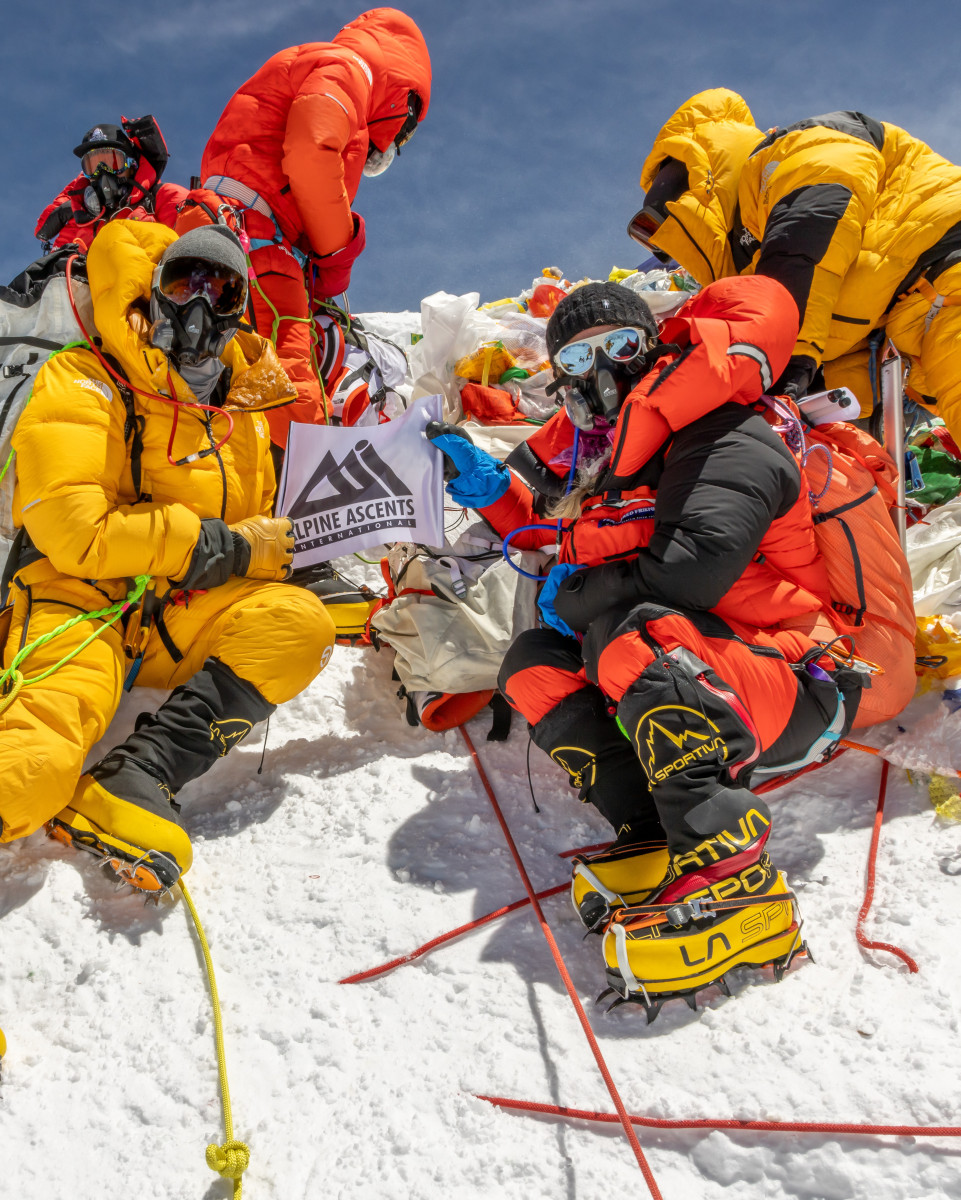
Over the years, this program has served as a springboard for hundreds of climbers—supporting everything from personal alpine goals to professional guiding and expedition careers. Numerous climbers who began with this course have gone on to summit major peaks around the world, including Denali and Everest, while many others have used the training to become more competent, self-reliant climbers in the Cascades and beyond.
It’s important to note that climbers will develop skills at different rates. Not every climber leaves the course with the same level of technical proficiency, efficiency, or comfort in complex terrain. Some graduates are ready to move quickly toward more advanced objectives, while others benefit from additional experience on similar-level climbs before progressing. Alpine Ascents’ guides provide individualized feedback and recommendations to help each climber choose appropriate next steps based on performance, fitness, and overall readiness.
Typical next objectives after this course may include:
- Cascade Range objectives such as Mount Shuksan and advanced routes on Mount Baker
- International volcano climbs in Mexico and Ecuador
- Advanced beginner peaks in Nepal
- Aconcagua
- Denali (often following additional training and preparation)

30+ Years of Mountaineering School
Alpine Ascents brings more than 30 years of guiding experience in the Cascades and on the world’s highest peaks to our 8-day Mount Rainier program. As one of our preeminent training courses, this long-standing program has helped launch the alpine careers of countless climbers who have gone on to pursue objectives around the world. It’s a program that reflects the same standards of quality, client care, risk management, and environmental stewardship that define all our global expeditions.
Mount Rainier’s glaciated terrain, complex route options, and variable weather provide an ideal classroom for developing core alpine skills in a true mountain environment. Our depth of experience allows us to operate with refined logistics, conservative decision-making, and consistent guiding standards—creating a focused, supportive learning environment for meaningful skill progression.

The Alpine Ascents Way
Throughout the course, Alpine Ascents’ highly trained mountain guides lead instruction with a strong focus on hands-on learning, skill progression, and mentorship in real mountain terrain. We’ve intentionally structured the 8 Day Mountaineering Course to provide repeated practice of core alpine systems, including glacier travel, rope team management, crevasse rescue, and movement on snow and ice, while helping climbers build strong foundations in risk assessment, communication, and decision-making.
Guides tailor instruction to individual experience levels, providing personalized coaching, feedback, and skill refinement to help climbers leave the course more competent, confident, and prepared for future alpine objectives.
Seattle-Based
Alpine Ascents is one of the only Rainier guide services based in Seattle offering round-trip transportation from Seattle to Mount Rainier and back. Our shuttle eliminates the need for a rental car for the duration of the course and a complicated three-hour drive each way to the mountain.
Guides
Our guiding team includes full-time professionals known for their technical expertise, leadership, and ability to teach in demanding mountain environments. Many have earned industry awards and spent much of their careers guiding with Alpine Ascents. More than just strong climbers, our guides are dedicated mountain educators who provide individualized coaching and professional mentorship that helps each participant grow, gain confidence, and move closer to their climbing goals.
Gear Department
Alpine Ascents has a full-service gear department ready to assist climbers with equipment questions and preparations. Our store and rental fleet offer high-quality climbing gear, with discounts available to all Alpine Ascents climbers.
Indigenous History of Taquoma
Land Acknowledgement
We acknowledge we gather upon the ancestral lands of the Muckleshoot, Puyallup, and Nisqually Tribes. These communities have lived on and stewarded the lands surrounding təqʷubəʔ (tah-ko-bah) since time immemorial and continue to do so today. We recognize that this land acknowledgment is one small step toward true ally ship and we commit to uplifting the voices, experiences, and histories of the Indigenous people of this land and beyond.
History of Taquoma
For the last century, the highest volcano looming over the PNW has been known widely as Mount Rainier. This name, coined by a European explorer, holds minimal significance to the rich history of the land and culture existing in this space since time immemorial. Although it has grown to hold meaning today, the aim of the history presented here is to educate about the local Native American history on and around Taquoma (Mount Rainier).
Taquoma , just one of the many names for the highest volcano in Washington state, means Mother of the Waters. Native American stories tell of a time when the mountain we know today as Tahoma lived in the Olympic mountain range. The range became too crowded, so Taquoma decided to move out and into less populated lands. She told her son- “Taquotma” Translation: Don’t forget the water. Her son brought the waters out East with them, which is why Taquoma- The Mother of Waters- serves as the headwaters for many rivers in the area.
Within the last century, archeological studies have found evidence of Native American tribe activity dating back thousands of years. Archeologists predict Native American communities lived in the plains surrounding Tahoma as early as 15,000 to 10,000 years ago. Since then, when glaciers began to melt, communities moved higher up the mountain as flora and fauna began to thrive within the area. More recent archeological studies have found remnants of tribe’s rock shelters and foraging materials such as food, tools, and fire pits dating back to 1,200 years. For more information on the archeological history of Tahoma visit the NPS Mount Rainier Website.
History of Western Washington Tribal Lands
Since time immemorial, native tribes of Washington have inhabited the land on and around Taquoma. The Cowlitz, Muckleshoot, Nisqually, Puyallup, Squaxin Island, Yakama, and Coast Salish tribes are those that call parts of Taquoma home today. There are many different names for the mountain, Taquoma being one well known throughout the region. Tribes coexisted upon the land for centuries. Within the last 200 years, European colonizers arrived and began commandeering the land. In 1854 The Treaties of Point Elliott and Medicine Creek were instituted, allocating small plots of land for tribes to live upon and continue their traditional practices. Throughout the early 1900’s, tribes watched their ancestral lands quickly diminished even further – often left with just a few acres to call home. Settlers continued to seize their homelands. Throughout the early 2000’s, tribes such as the Muckleshoot and Puyallup began reclaiming their homelands, slowly buying back the land that had been sold to non-Indians throughout the early 1900’s. Today, indigenous climbers are reconnecting with Taquoma on both personal and collective levels. One of our climbers on a quest to reintroduce Native people to these spaces embraces Taquoma as a symbol of visibility for the indigenous stories and history of the mountain, and we will continue to support these efforts as best we can.


8 Day Rainier | Taquoma Mountaineering Course Blog
More from the blog


8 Day Rainier Course FAQ
The course takes place on Mount Rainier (Tahoma / Taquoma) in Washington State, focusing on the northeast side of the mountain and ascending via the Emmons Glacier.
The course spends the first 5 days focusing on in-depth mountaineering instruction and skills practice. The final 3 days are dedicated to putting those skills into action during a summit attempt of Mount Rainier via the Emmons Glacier.
During the summit climb, we maintain a 2:1 student-to-guide ratio (roped up in teams of two students and one guide), allowing for close instruction, pacing, and individualized coaching.
The curriculum covers crevasse rescue haul systems, snow anchor construction, cramponing, ice axe self-arrest, glacier travel, route finding, wilderness navigation, hazard evaluation, and Leave No Trace ethics.
The course is designed for beginner and intermediate climbers who want to build comprehensive glacier mountaineering skills on a major high-altitude peak. It serves as an official prerequisite for Denali expeditions and major international climbs.
No technical mountaineering experience is required, but prior multi-day backpacking and camping experience is strongly recommended due to the heavy pack loads and backcountry environment.
Because students carry personal equipment, clothing, food, tents, and a share of group gear, packs average between 65 and 70 lbs., making this one of our most physically demanding courses.
The Emmons Glacier is the largest glacier in the contiguous United States. The route offers a less crowded, true wilderness experience compared to the Muir route, featuring moderate slope angles and an extra night spent at High Camp after summit day.
Students camp in 4-season expedition tents on the snow and glacial moraine, establishing camps at Glacier Basin, the Inter Glacier, and Camp Schurman (9,500 ft.).
Alpine Ascents provides group climbing equipment (ropes, hardware, snow protection), tents, National Park climbing permits, and transportation to the mountain. Students bring their own personal gear, clothing layers, boots, and meals.
No. Students plan, purchase, and prepare their own backcountry meals and trail snacks for the entire 8 days, which provides essential practice for future expedition meal planning.
A mandatory gear check is held at 3:00 p.m. at the Alpine Ascents office in Seattle the day before the course begins to inspect personal gear, fit rental equipment, and distribute group gear.
Yes. Round-trip van transportation between our Seattle office and the White River Trailhead at Mount Rainier National Park is included in the course tuition.
Alpine Ascents is allowed to run only four 8-Day Rainier School departures per year under National Park concessions, so early registration is strongly recommended.
Courses run from late May through early August, offering the best conditions for glacier navigation, stable snowpack, and summit attempts on the Emmons Glacier.