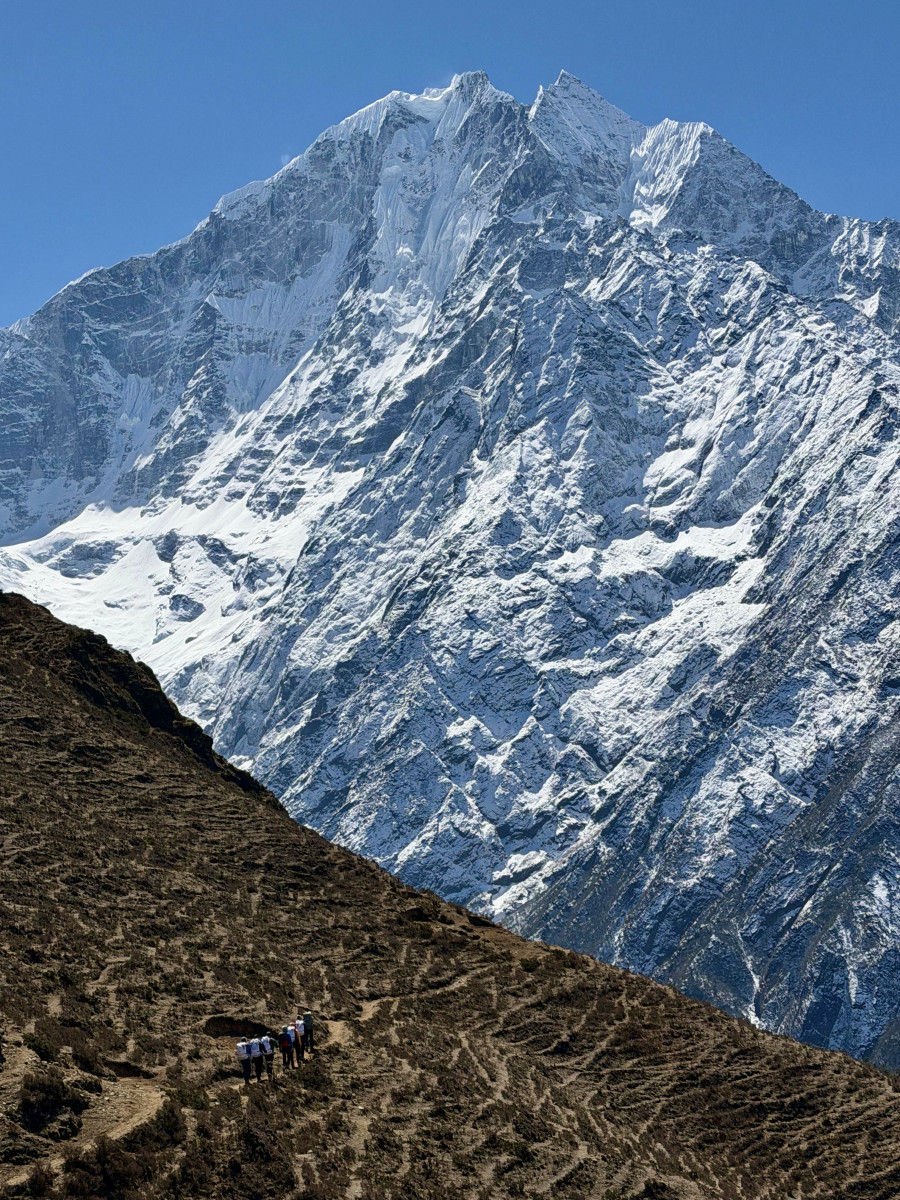
The Eiger
(13,025FT / 3,970M) | SwitzerlandClimbing The Eiger
- Worldwide Expeditions
- Pack Weight: 20 Lbs
- 9 Days
- Gallery
- Dates & Pricing


As one of the most iconic mountains in the world, the Eiger rises dramatically above the Bernese Oberland, commanding attention from the valleys of Grindelwald below. Its dark limestone walls and glaciated flanks have made it a quintessential objective in the history of alpinism, most famously defined through the legendary 1,800-meter (5,900-foot) north face and the Eigerwand, or “Nordwand”(the largest north face in the Alps). From sweeping glaciers to rolling green pastures below, the Eiger blends raw alpine scale with the charm of Swiss mountain culture.
Our ascent follows the historic Mittellegi Ridge, an elegant and exposed line that provides sustained, engaging climbing from hut to summit. With airy positions, dynamic movement along the crest, and dramatic views across the Jungfrau region, the Mittellegi delivers a true alpine experience in one of Europe’s most storied settings.
Our all-inclusive approach covers hotels, huts, and lift access, creating a seamless experience rarely matched by competitors. Led by American IFMGA-certified guides who work extensively in the Alps each season, our climbing days combines technical excellence, strong instructional leadership, and the rich cultural context that defines climbing in Switzerland.
Key Components

Guide Leadership: All trips are led by bilingual, American IFMGA-certified guides with more than a decade of Alps experience

Guide Ratio: A 1:1 climber-to-guide ratio on the Eiger summit

All-Inclusive Logistics: Trams, lifts, gondolas, hotels, and all transportation from Chamonix, France

Lightweight Climbing Pack: Climb with a lightweight pack while utilizing European mountain huts for lodging, meals, and support

US-Based Company: The only US-based company offering all-inclusive Alps programs with American IFMGA guides based in Europe.

Mountain Huts: Three nights in European mountain huts complete with breakfast and dinner

Hotel Lodging: Four nights in three-star hotels in downtown Chamonix, France, and Zermatt, Switzerland

Pre-Climb Training: Two peaks over 3,500 meters, plus two days of rock climbing instruction


Climbing the Eiger: Mittellegi Ridge
Climbing the Eiger via the classic Mittellegi Ridge is a true alpine experience—elegant, exposed, and steeped in history. The Mittellegi forms the Eiger’s long, sharp east ridge, rising directly from the glaciers below the summit at 3,967 meters (13,015 ft). Our approach begins with a ride on the historic Jungfraubahn cogwheel railway to the Eismeer station—the remarkable train line that tunnels through the very heart of the Eiger’s north face. From the station, we descend through a tunnel and rappel onto the Kallifirn Glacier, crossing its broken surface before beginning the climb toward the hut.
The ascent to the Mittellegi Hut (3,355 m), dramatically perched along the ridge crest above the immense Nordwand, involves a mix of pitched alpine rock climbing up to 5.7 and sections of exposed scrambling. Movement is steady and engaging, with increasing position as we gain the crest and arrive at one of the most spectacularly situated huts in the Alps.
Summit day begins early. The ridge above the hut is sustained, narrow, and highly exposed, requiring precise footwork and efficient rope management. Climbers encounter steep rock steps, airy knife-edge sections, and typically a final snow arête leading to the summit, climbed with crampons and ice axe. The descent via the south ridge is long and complex, involving rappels, down-climbing, traversing, and sustained focus all the way to the Mönch saddle. Excellent fitness, composure, and endurance are essential for this proud and committing alpine climb.

The Alpine Ascents Way
Our Eiger program exemplifies the Alpine Ascents Way by combining intentional progression, adaptive planning, and world-class guiding to set climbers up for success on one of the Alps’ most classic objectives. The itinerary begins with focused alpine rock and mountaineering training in Chamonix, where climbers refine rope systems, ridge movement, and alpine rock techniques in mountainous terrain that mirrors the demands of the Mittellegi Ridge. These early days build confidence, efficiency, and acclimatization before transitioning to Grindelwald and the direct approach on the Eiger.
From Grindelwald, we utilize the historic Jungfraubahn cogwheel railway to reach Eismeer station, rappel directly onto the glacier, and begin the technical climb toward the Mittellegi Hut. Summit day on the Eiger’s Mittellegi ridge is a demanding and sustained objective with significant exposure, narrow ridge travel, pitched rock climbing, and snow/ice steps near the summit. Our itinerary is intentionally designed with flexibility—incorporating weather days and logistical options—so that we climb in the best possible conditions while maintaining a strong, high-quality alpine experience.
Our all-inclusive approach covers hotels, mountain huts, trams and lift logistics, and all in-country transportation, letting climbers focus fully on preparation and performance. Guided by American IFMGA-certified guides with extensive Alps experience, we provide thoughtful instruction, strategic decision-making, and personalized risk management throughout the climb. With a guiding ratio geared toward individualized attention on summit day, the Alpine Ascents Eiger program is rooted in preparation, adaptability, and exceptional guiding—designed to help climbers move confidently and efficiently on one of the Alps’ most iconic ridges

History of the Eiger
Towering above the village of Grindelwald in the Bernese Oberland, the Eiger (3,967 m / 13,015 ft) holds a defining place in the history of alpinism. The summit was first reached in 1858 via the west flank, it was the massive 1,800-meter (5,900-ft) north face—the infamous “Nordwand”—that captured worldwide attention. In the 1930s, the north face became the last great unsolved problem of the Alps. Multiple attempts ended in dramatic rescues and fatalities, most notably the tragic 1936 effort of Toni Kurz and his team, which was followed closely by the European press. The face gained a reputation as the “Mordwand” (“Murder Wall”), symbolizing both the ambition and peril of high-level alpine climbing.
In 1938, a German-Austrian team—Anderl Heckmair, Ludwig Vörg, Heinrich Harrer, and Fritz Kasparek—successfully climbed the face via what is now known as the Heckmair Route. Their ascent marked a turning point in mountaineering history, cementing the Eiger North Face as one of the great achievements of the pre-war alpine era and one of the most coveted prizes in European climbing.
The Mittellegi Ridge, our route on the Eiger, carries its own historic significance. First climbed on September 10, 1921, at the request of Japanese alpinist Yuko Maki and led by Grindelwald guides including Samuel Brawand, the elegant east ridge quickly became a classic line to the summit.
Note from Our Alps Director
For me, the Eiger represents the complete alpine experience—history, sustained exposure, and breathtaking scenery woven into a single, unforgettable climb. It is the kind of objective that demands focus and presence. On the Mittellegi Ridge, movement becomes rhythmic and deliberate, and the noise of daily life fades into the background. What remains is the simple, meditative act of placing one foot in front of the other along a spectacular crest of stone and snow.
The experience begins in a uniquely dramatic fashion: rappelling from the Jungfraubahn tunnel onto the glacier below. From that moment on, the setting is extraordinary. Massive glaciers spill from the high peaks, rolling green hills stretch toward the valley, and the village of Grindelwald feels both distant and vividly present beneath you. The position on the ridge is constant and engaging, with sweeping views in every direction.
Climbing the Eiger via the Mittellegi also offers one of the great advantages of the Alps—the ability to travel light and stay in well-appointed mountain huts. Carrying a streamlined pack while enjoying warm meals prepared by Swiss hut keepers adds both efficiency and comfort to a serious alpine objective.
What continues to draw me back is the exposure and elegance of the Mittellegi Ridge itself. Few climbs combine such rich mountaineering history with such a refined and aesthetic line to the summit.


Environmental Responsibility
Alpine Ascents is committed to responsible stewardship of the mountain environments we operate in—locally and around the world. On every expedition, trek, and course, we aim to leave each place better than we found by minimizing impact, supporting local conservation efforts, and respecting the people and cultures connected to these landscapes. Our guides and staff are held to high ethical standards in the field and abroad, and we approach every program with a strong commitment to environmentally responsible practices.
Environmental responsibility is a core value at Alpine Ascents. We teach and follow Leave No Trace principles on all climbs and courses, integrating these practices into our daily operations and instructional framework. The mountains are our workplace and our home, and we believe long-term access depends on thoughtful use and care of these fragile environments.
Over the years, we have led and supported numerous conservation initiatives across our global programs. With our Sherpa teams, we have contributed to clean-up efforts on Mount Everest. In North America, Alpine Ascents pioneered human waste management systems adopted by land managers, and we have implemented structured waste-removal practices on peaks such as Aconcagua. These efforts reflect our broader commitment to reducing impact, improving mountain management systems, and educating climbers to become environmentally conscious stewards wherever they travel.