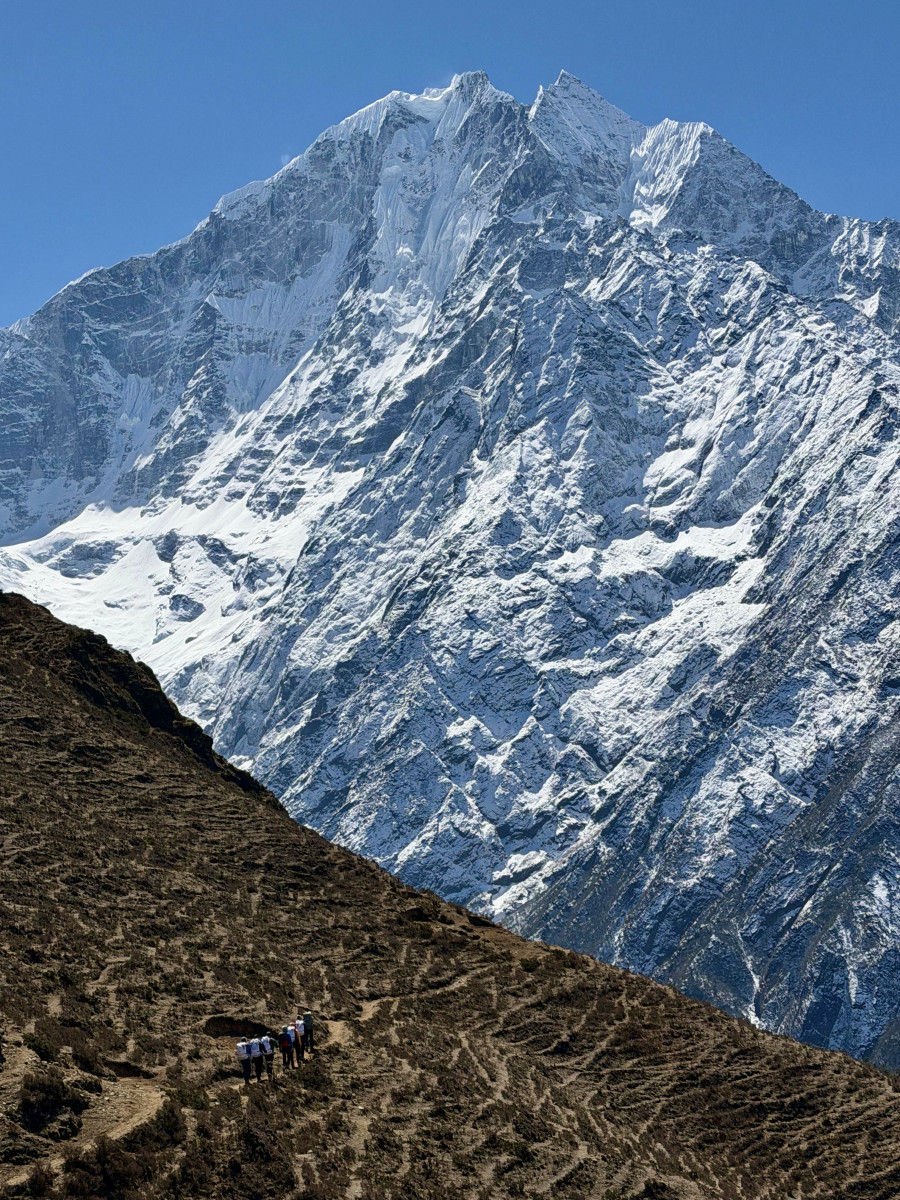
Chimborazo
20,701FT / 6,310M | EcuadorAbout Chimborazo
- Worldwide Expeditions
- Pack Weight: 35+ lbs.
- Dates & Pricing


At 20,701 feet (6,310 meters), Chimborazo is the highest mountain in Ecuador — but its real claim to fame lies in geometry, not elevation. Because Earth bulges outward at the equator, and Chimborazo sits almost exactly on it, the summit is actually about 2,168 meters (7,113 feet) farther from the center of the Earth than Mount Everest. That makes it the closest point on the planet’s surface to the stars.
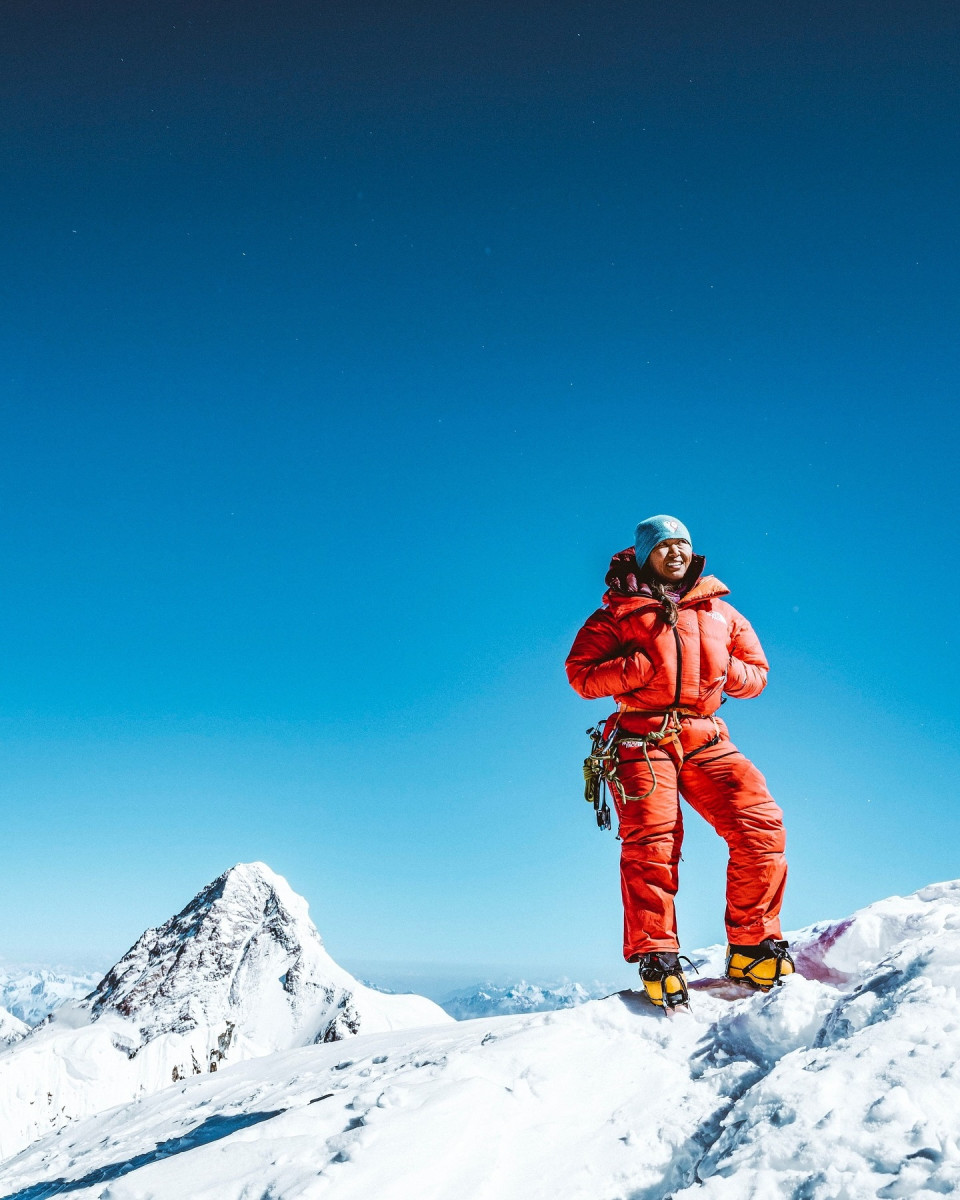
The mountain comprises four summits — Whymper, Veintimilla, Politécnica, and Nicolás Martínez — with Whymper Peak as the highest point, and the one our teams set their sights on. Weather permitting, the view from the top is staggering: a sweep of the Andes that stretches all the way to the Pacific coast.
The region surrounding Chimborazo is also home to one of the largest concentrations of Indigenous communities in Ecuador, adding rich cultural depth to the climb.
Chimborazo is climbed as part of our 16-day Ecuador Volcanoes expedition.

The guides were phenomenal,
they were competent and personable. It was clear that they knew the mountains well and were more than capable of making decisions in our best interest. They communicated all decisions and checked in when appropriate. The expedition was fantastic and exceeded my expectations for the high-quality trips I’ve come to expect from Alpine Ascents.
David and Diego worked very well together to make it a high end, well organized expedition.
Everything from the luxury accommodations to the excellent restaurants to the decision making on the mountain were A+, as we have come to expect from AAI over the years. Hopefully David Gottlieb continues to guide for many more years. He’s the reason we signed up for this expedition and he’s simply the best in the business.
The Climbing Route
The climb begins at Carrel Refuge (4,800 m / 15,744 ft), reached by road, where climbers acclimatize before continuing on foot to Castle Camp (5,300 m /17,388ft) — the last stop before the summit push.
Teams typically depart Castle Camp around midnight, climbing through the night to reach the summit around dawn, before afternoon clouds roll in. The route ascends via El Castillo, a rocky ridge of moraine and loose rock that — due to significant glacial retreat in recent years — is now generally considered safer than the older, more direct corridor route beneath exposed ice cliffs.
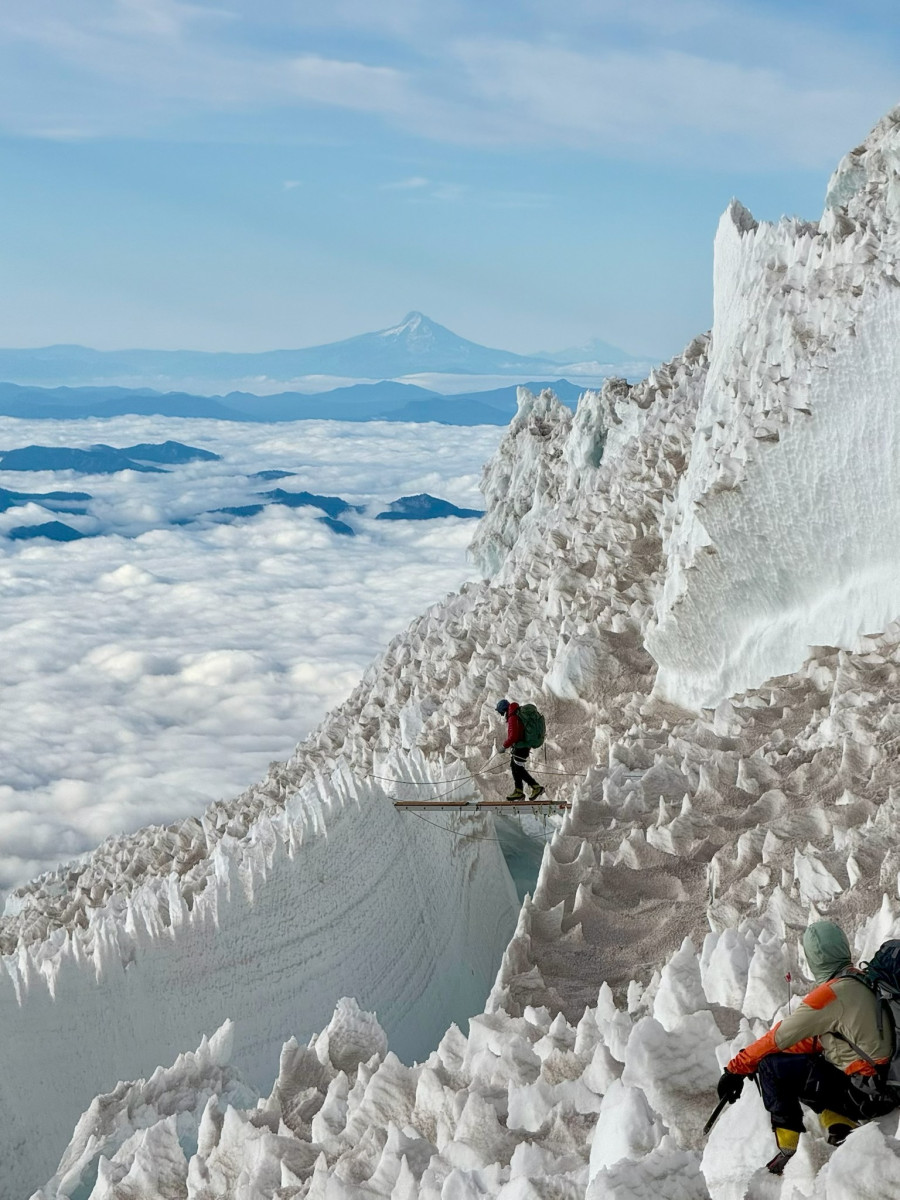
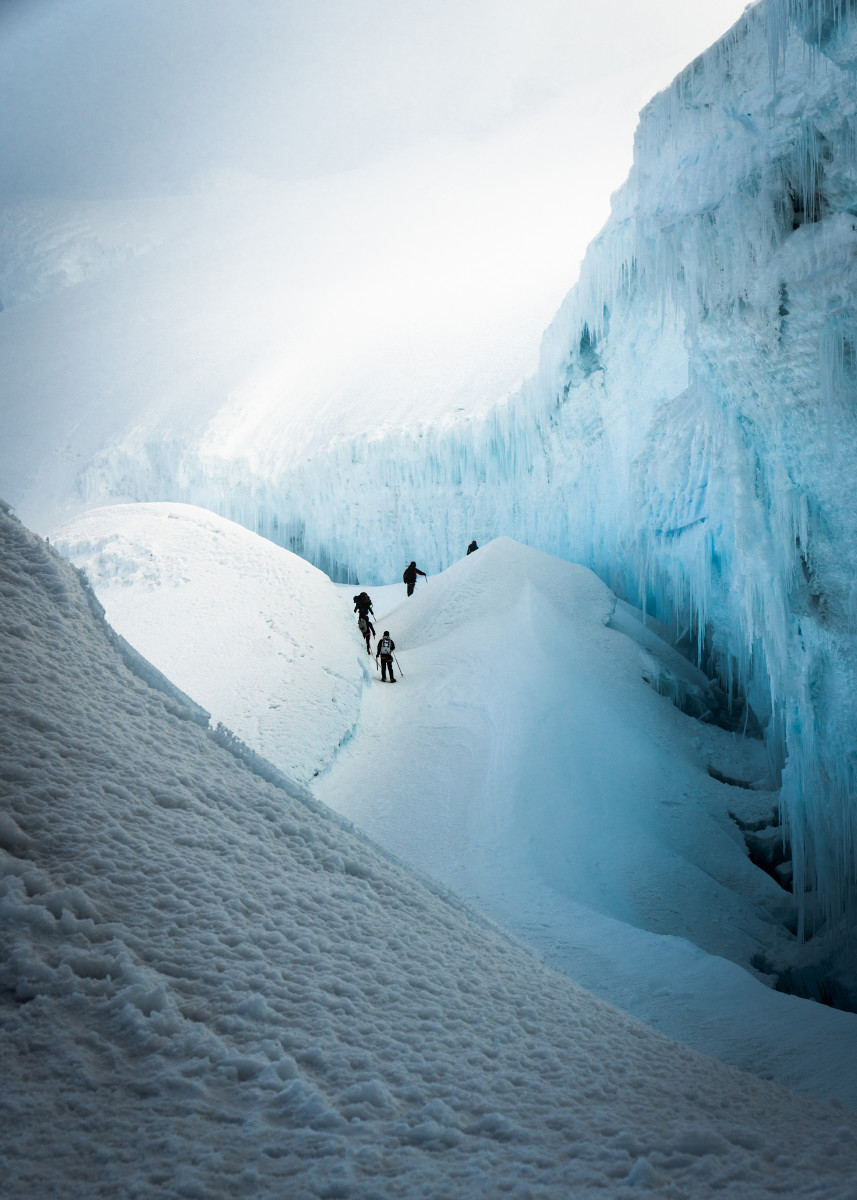
Above El Castillo, the route joins the glacier proper, where climbers rope up for crevasse travel on slopes ranging from 30–50 degrees, depending on conditions. The route steepens toward the Veintimilla summit (6,267 m), before a final push across the broad summit plateau to Whymper Peak (6,310 m) — the true summit.
Round-trip from the refuge, the climb typically takes 8–12 hours, depending on conditions, snow coverage, and team pace. Because of the technical terrain, crevasse hazards, and altitude, it’s essential to climb with an experienced, certified guide.
Climbing Conditions
Mountain conditions can change quickly, and there are times when Chimborazo is closed to climbers due to weather, snow conditions, or other safety factors. When this happens, we pivot to Antisana (18,875 ft), another iconic and beautiful Ecuadorian volcano — ensuring your expedition still delivers a rewarding summit experience.

Summit Day
Summit day on Chimborazo is a long and demanding effort, typically beginning around midnight from the Castle Camp. Starting at night allows climbers to take advantage of colder temperatures and firmer snow conditions. After a final gear check, headlamps go on and the climb begins through moraine and rocky terrain before transitioning onto the glacier, where climbers rope up with their guide.
From there, the route steadily gains elevation over snow and ice, with sustained sections of approximately 30–50 degrees. As climbers approach 20,000 feet, altitude becomes the greatest challenge. Our 1:1 guide ratio allows each climber to establish a sustainable pace and gives the guide the flexibility to continually assess conditions, acclimatization, and how the climber is performing.
The route first reaches Veintimilla Summit before continuing across Chimborazo’s broad summit plateau to Whymper Peak at 6,263 m (20,548 ft). On a clear morning, climbers are rewarded with sunrise and expansive views across the Ecuadorian Andes.
After time on the summit, the team retraces the route as temperatures begin to rise and the snow softens. The entire summit climb and descent generally takes 10–12+ hours, making it the culmination of the acclimatization, training, and preparation built into the program.
Best Time of Year to Climb Chimborazo
The best times of year to climb Ecuador’s high mountains are generally June through August and December through February, when the Andes experience some of the most stable weather windows of the year. During these periods, climbers typically have the best opportunity for clear mornings, colder temperatures, and favorable snow and glacier conditions on peaks such as Cayambe, Cotopaxi, and Chimborazo.
Ecuador’s location near the equator makes climbing possible throughout much of the year, and successful ascents can certainly happen outside these traditional seasons. However, climbers should be prepared for a greater chance of cloud cover, precipitation, stronger winds, and more variable snow conditions.
Conditions can change quickly in the high Andes, particularly on glaciated peaks such as Chimborazo. For this reason, our guides continually evaluate weather, snow, and route conditions throughout each expedition and adjust climbing plans when necessary to give the team the best opportunity for a safe and successful climb.
Climbing Equipment for Chimborazo
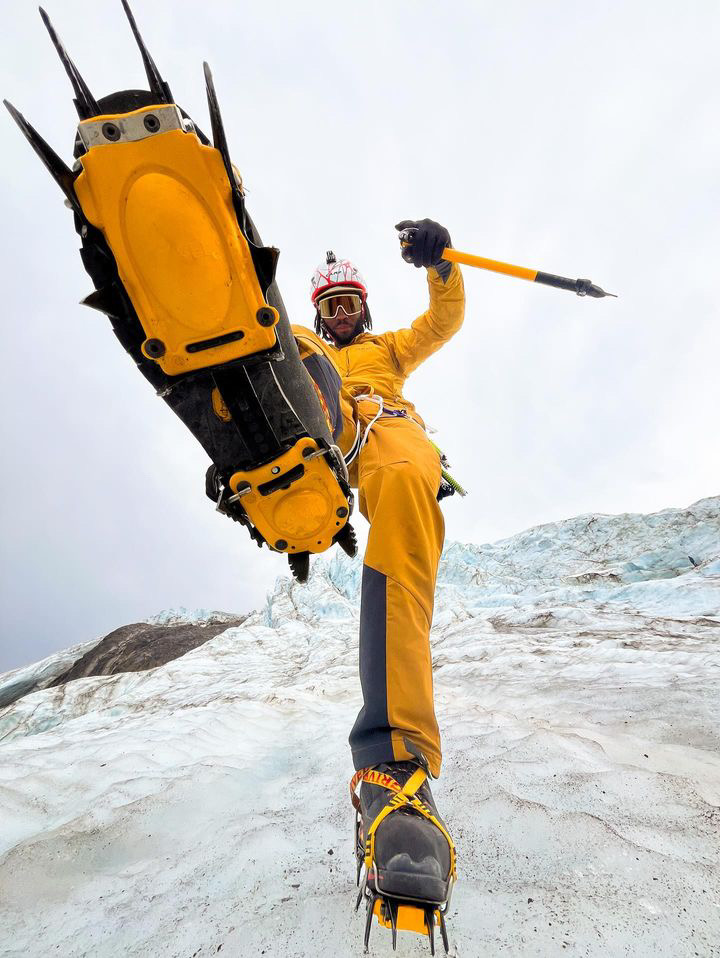
Climbing Chimborazo requires a complete mountaineering clothing and equipment system designed for cold temperatures, glacier travel, and rapidly changing weather. Climbers should arrive with appropriate insulating layers, waterproof outerwear, mountaineering boots, crampons, an ice axe, helmet, harness, and other technical equipment required for roped glacier travel.
Conditions vary considerably throughout the trip. At lower elevations and during our acclimatization days, daytime temperatures can be relatively mild, often reaching the 50s and 60s°F. As we move higher into the mountains, temperatures drop quickly, particularly at night and during early-morning summit climbs.
On Chimborazo, climbers should be prepared for temperatures around 0°F to 20°F (-18°C to -7°C) during the summit climb, with wind potentially making it feel considerably colder. Weather in the high Andes can change rapidly, and teams may experience sunshine, clouds, wind, snow, and precipitation over the course of the same trip.
A flexible layering system is essential. Climbers should be prepared for everything from warm hiking conditions at lower elevations to full winter conditions high on Chimborazo. Our equipment list has been developed specifically for the demands of the program and outlines required clothing, technical equipment, footwear, and personal gear.
Volcanoes of Ecuador Gear List